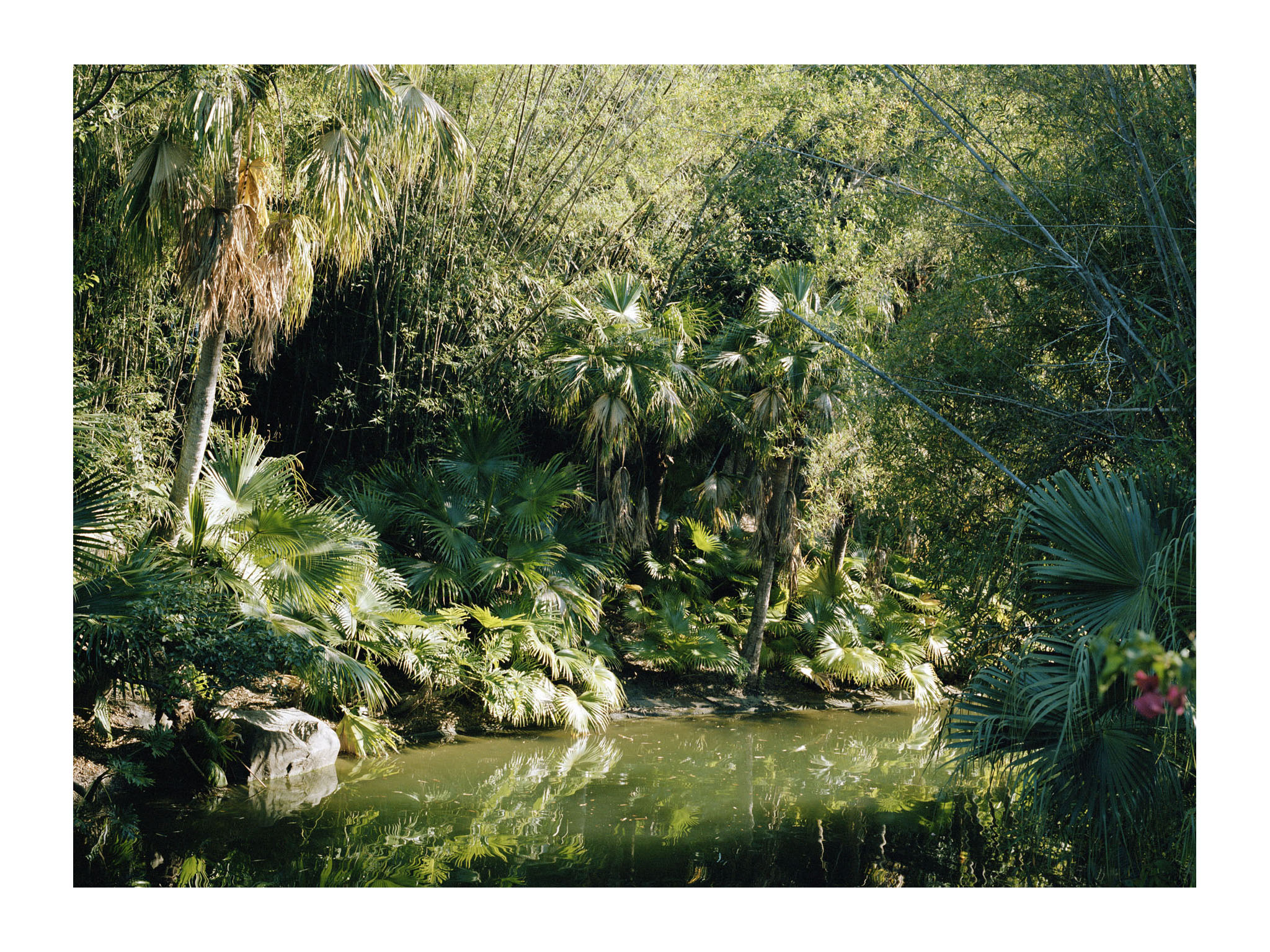
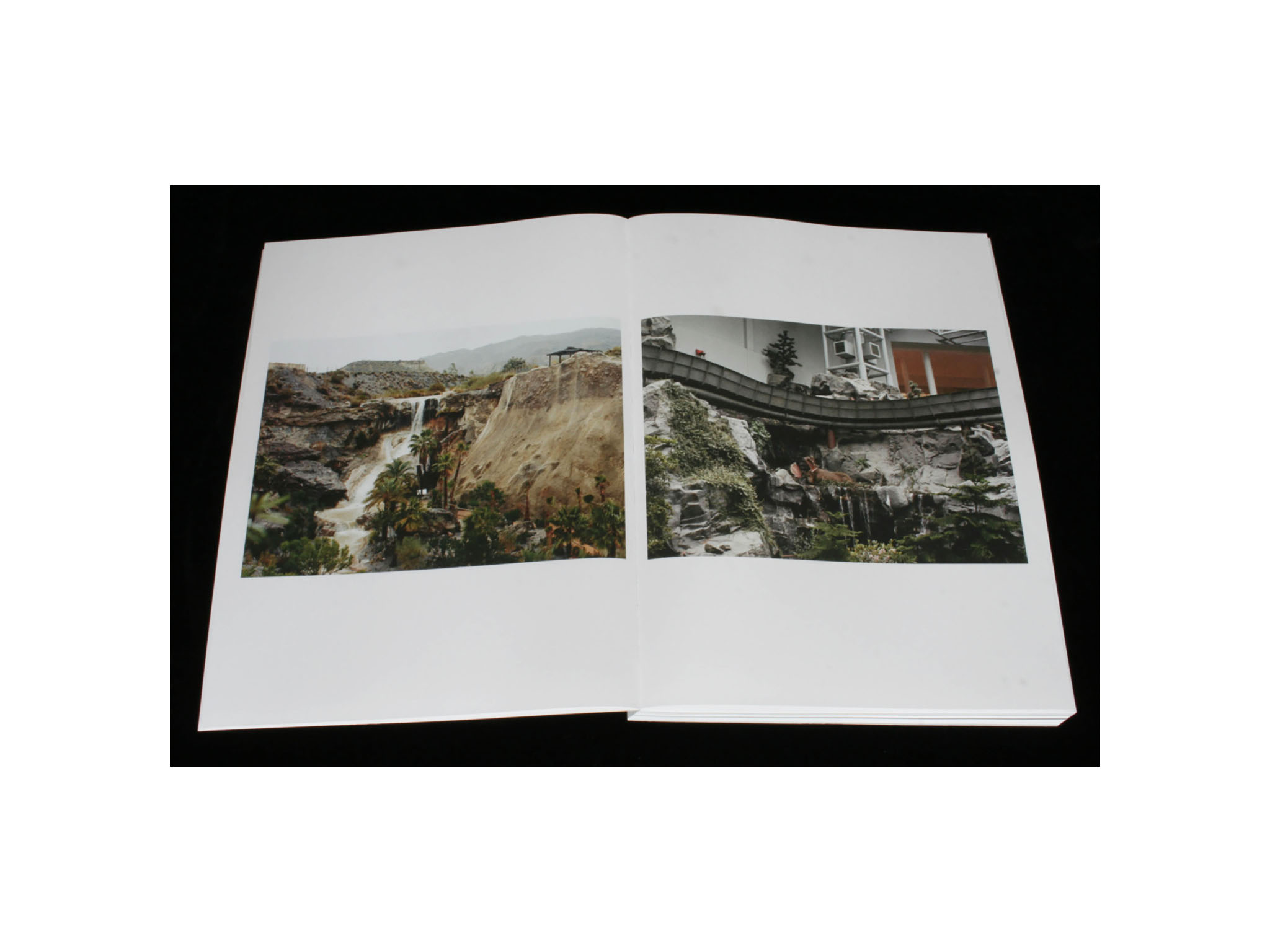
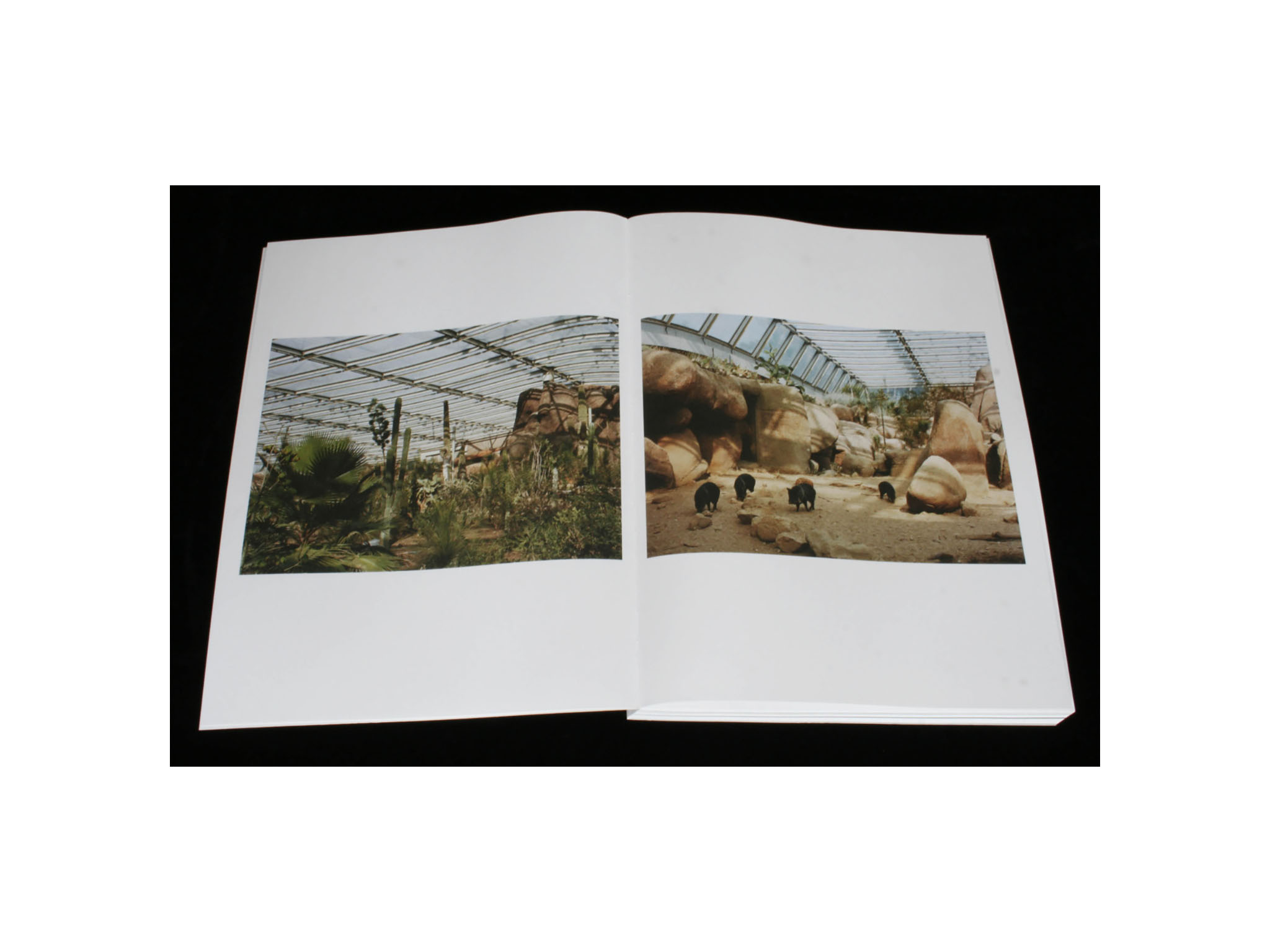
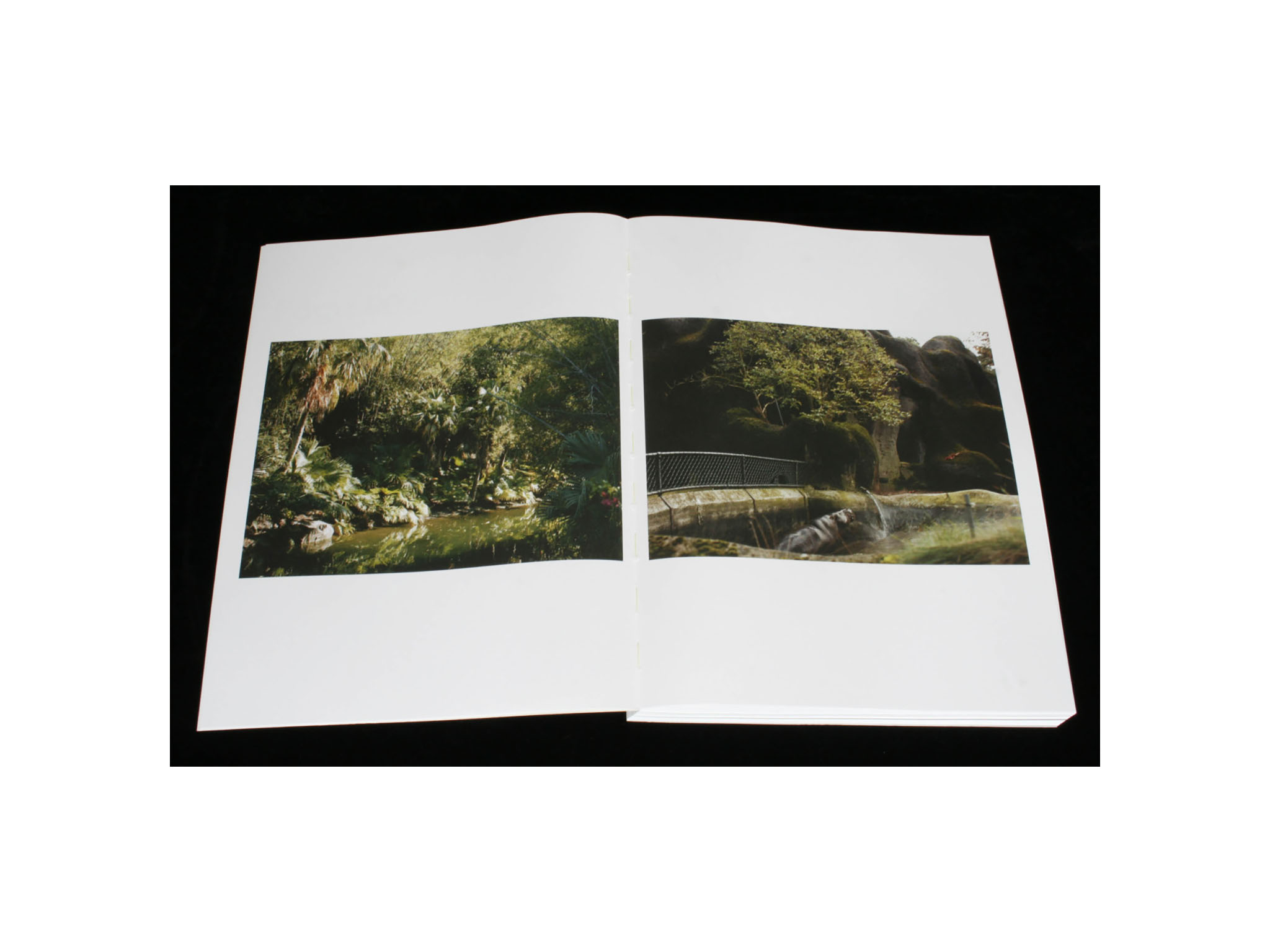
Eidyllion is a photographic series by Mandy Lee Jandrell that critically examines how late global capitalism manufactures idyllic visions of nature, whilst obscuring realities of climate crisis.
Working within constructed leisure environments in several countries and continents, Jandrell investigates how these spaces simulate encounters with “nature” while regulating, sanitising and commodifying it. The work focuses on the disjunction between the mythic natural worlds these environments promise and the tightly controlled realities they deliver, revealing how ecological experience is increasingly mediated through spectacle rather than engagement.
At the centre of the series is an examination of the visual languages through which these environments communicate fantasy, reassurance and aspiration. Jandrell’s photographs expose how nature is framed, tidied and aestheticised, transformed into a managed image that can be owned, circulated and consumed. In this context, the natural world appears less as a living, vulnerable ecology and more as a choreographed backdrop designed to meet expectations shaped by tourism, media and consumerist desire. This process of visual containment mirrors broader economic structures that prioritise appearance and growth over ecological responsibility, allowing environmental crisis to be acknowledged symbolically while remaining structurally unaddressed.
Eidyllion situates these contemporary sites within a longer visual history of landscape representation. Drawing on art‑historical precedents, from seventeenth‑century Dutch landscape painting to nineteenth‑century pastoral traditions, Jandrell highlights how images of “nature” have long functioned as ideological constructions, shaped by systems of ownership, national identity and nostalgia.
In contemporary leisure environments, these historic impulses persist in updated form: landscapes are engineered to reflect idealised fantasies of harmony and abundance while obscuring the environmental extraction, labour and ecological damage that underpin them.
Jandrell’s photographic approach moves deliberately between the aesthetics of the amateur snapshot and the formal language of documentary photography. Referencing ingrained habits of cultural tourism, this oscillation mirrors the dual logic of the spaces she photographs: apparently authentic yet wholly artificial. Subtle humour and visual dissonance expose how readily these environments are accepted as “natural,” revealing the ease with which constructed images can eclipse ecological reality.
Eidyllion ultimately invites a reconsideration of how contemporary culture imagines and consumes nature at a moment of escalating climate crisis. By revealing the mechanisms through which idyllic landscapes are produced and circulated, the work offers a quiet but incisive critique of the ideological systems, consumerism, tourism and utopian longing, that sustain environmental inaction. In doing so, it asks how visions of perfection and escape continue to replace meaningful engagement with environmental precarity, and how the image of nature has become a substitute for ecological responsibility.

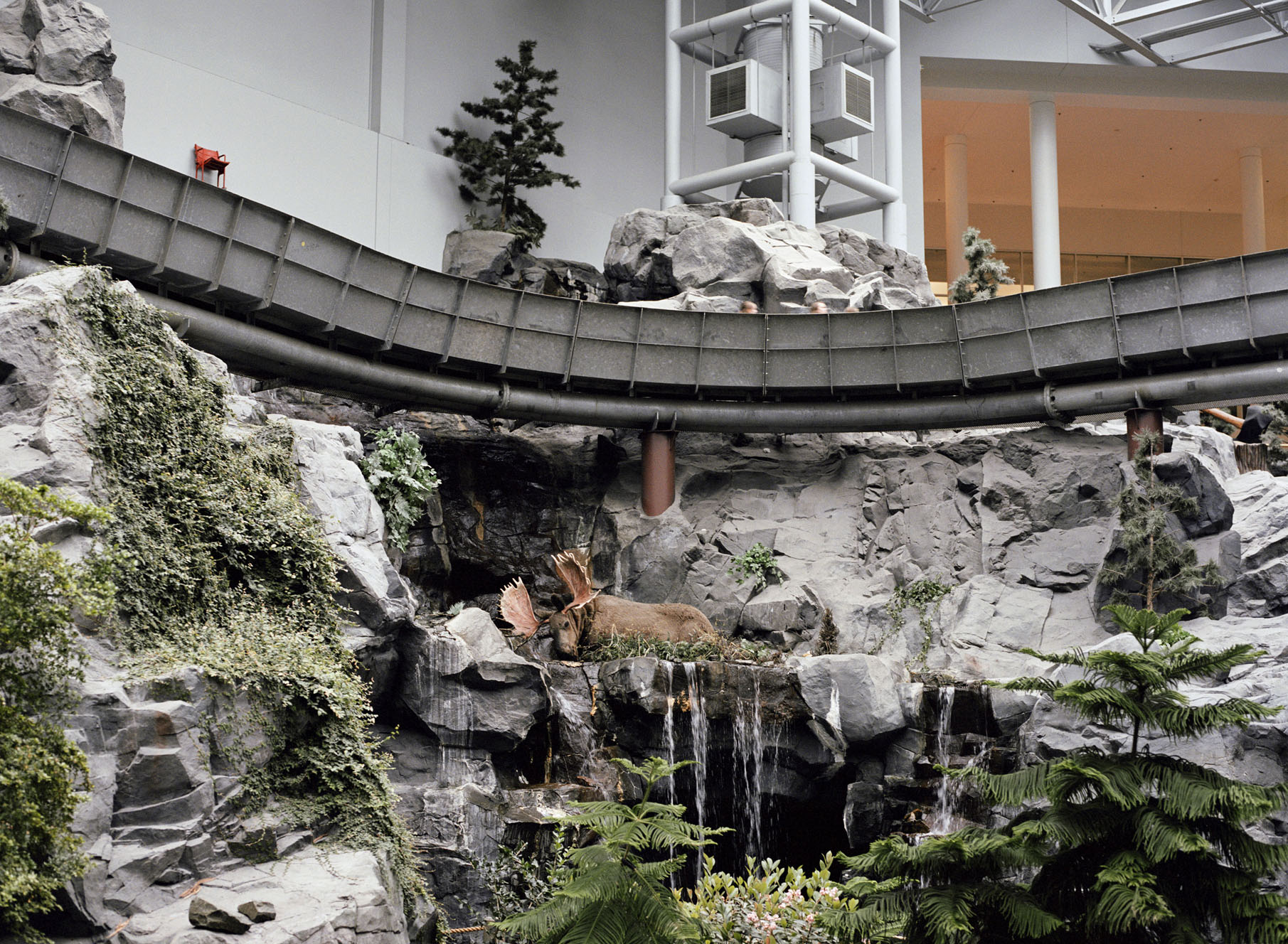
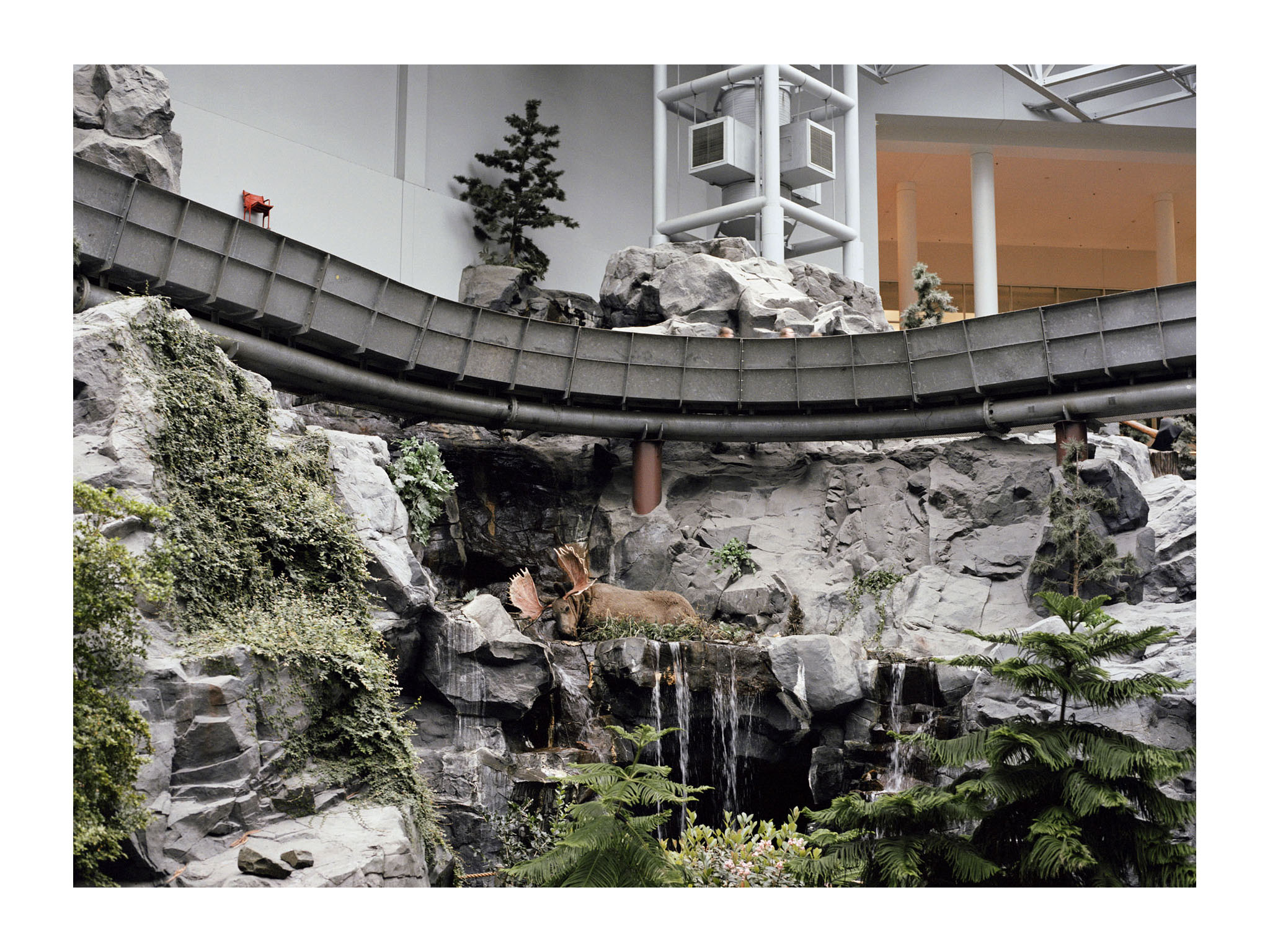
Moose, Camp America, Mall of America, Minneapolis, USA, 2005
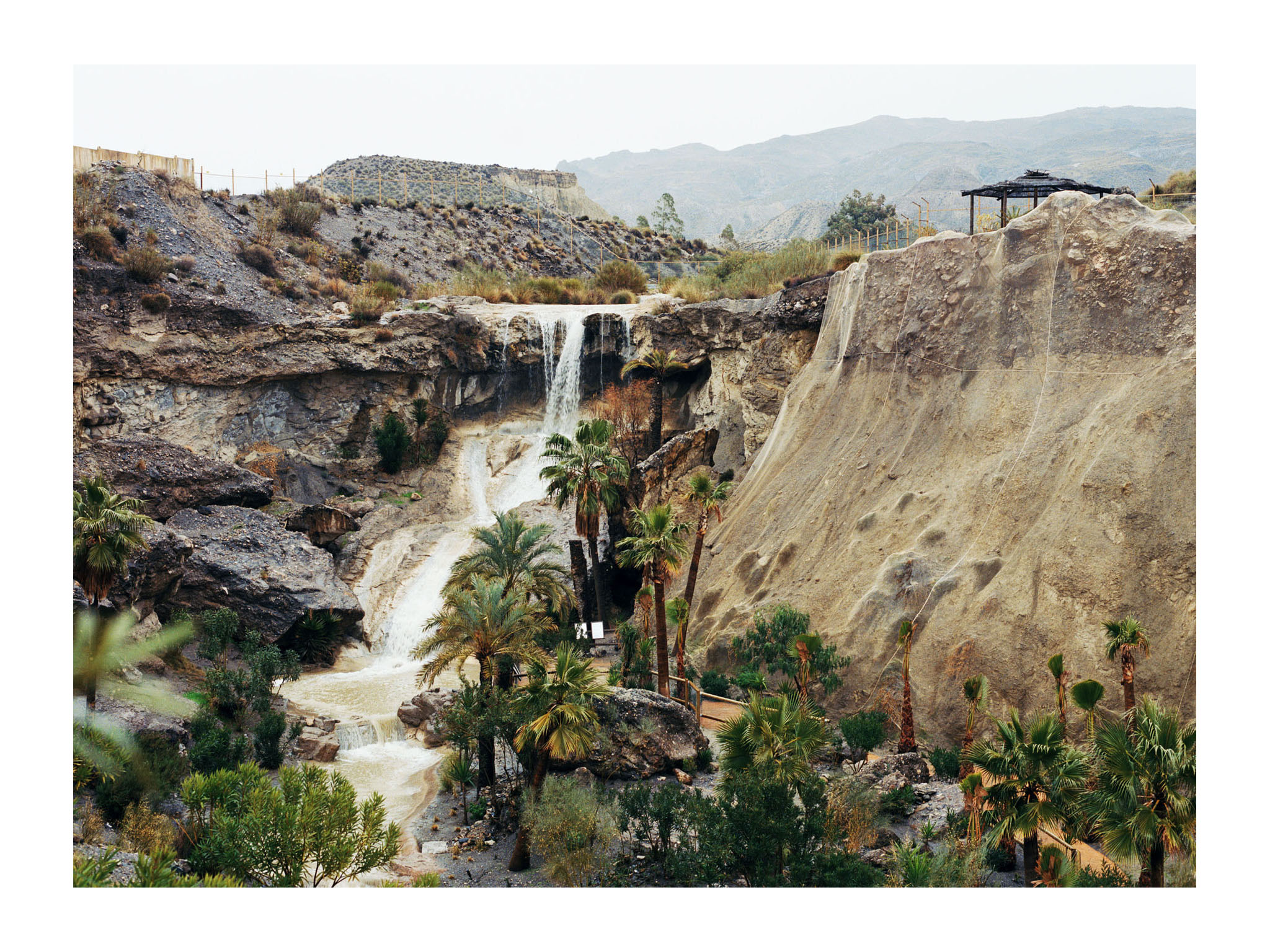
Waterfall, Mini Hollywood, Almeria, Spain, 2004
The Caribbean, Disneyworld, Florida, USA, 2005
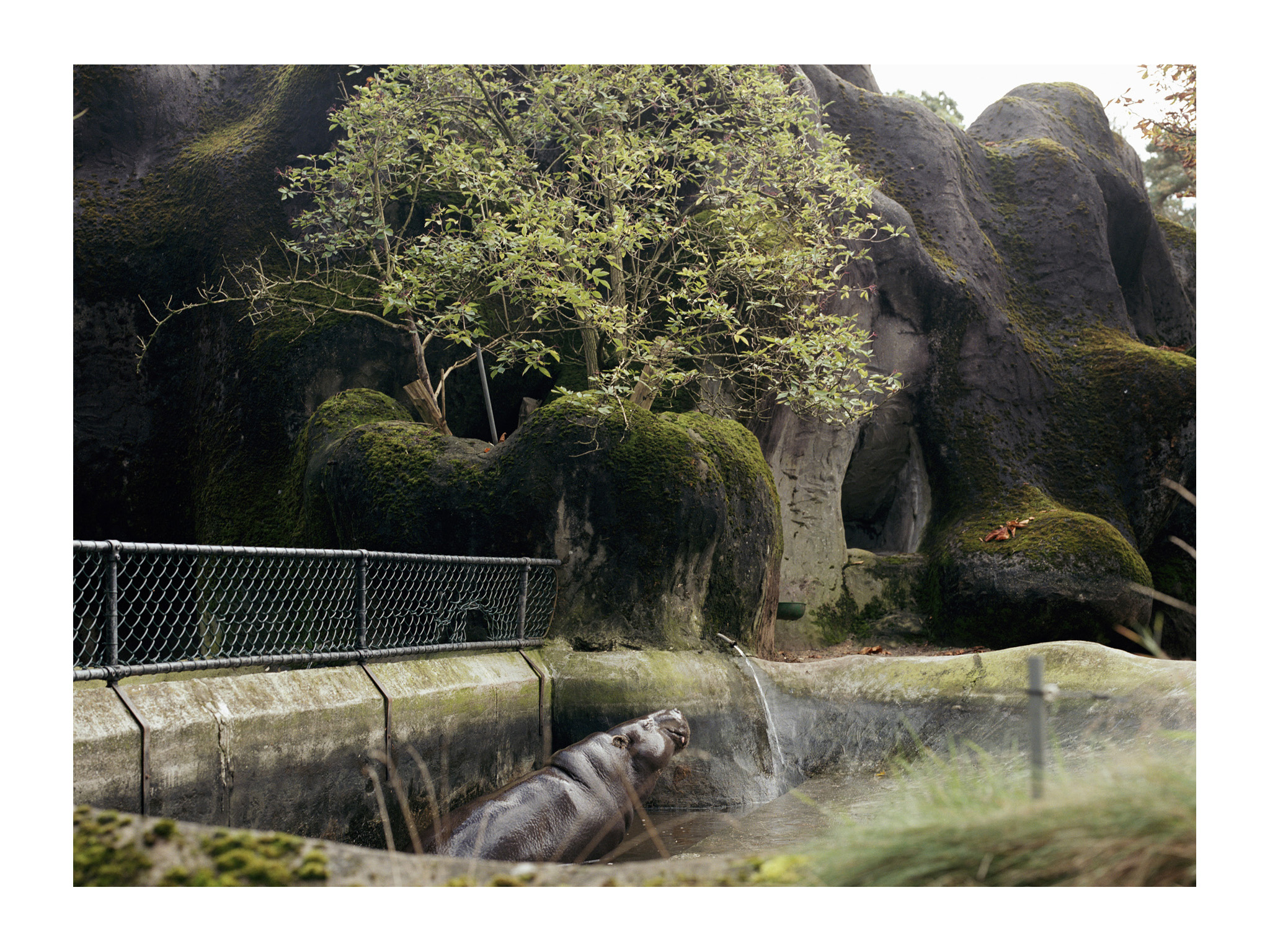
Hippopotamus, Nijmegen Zoo, The Netherlands, 2004
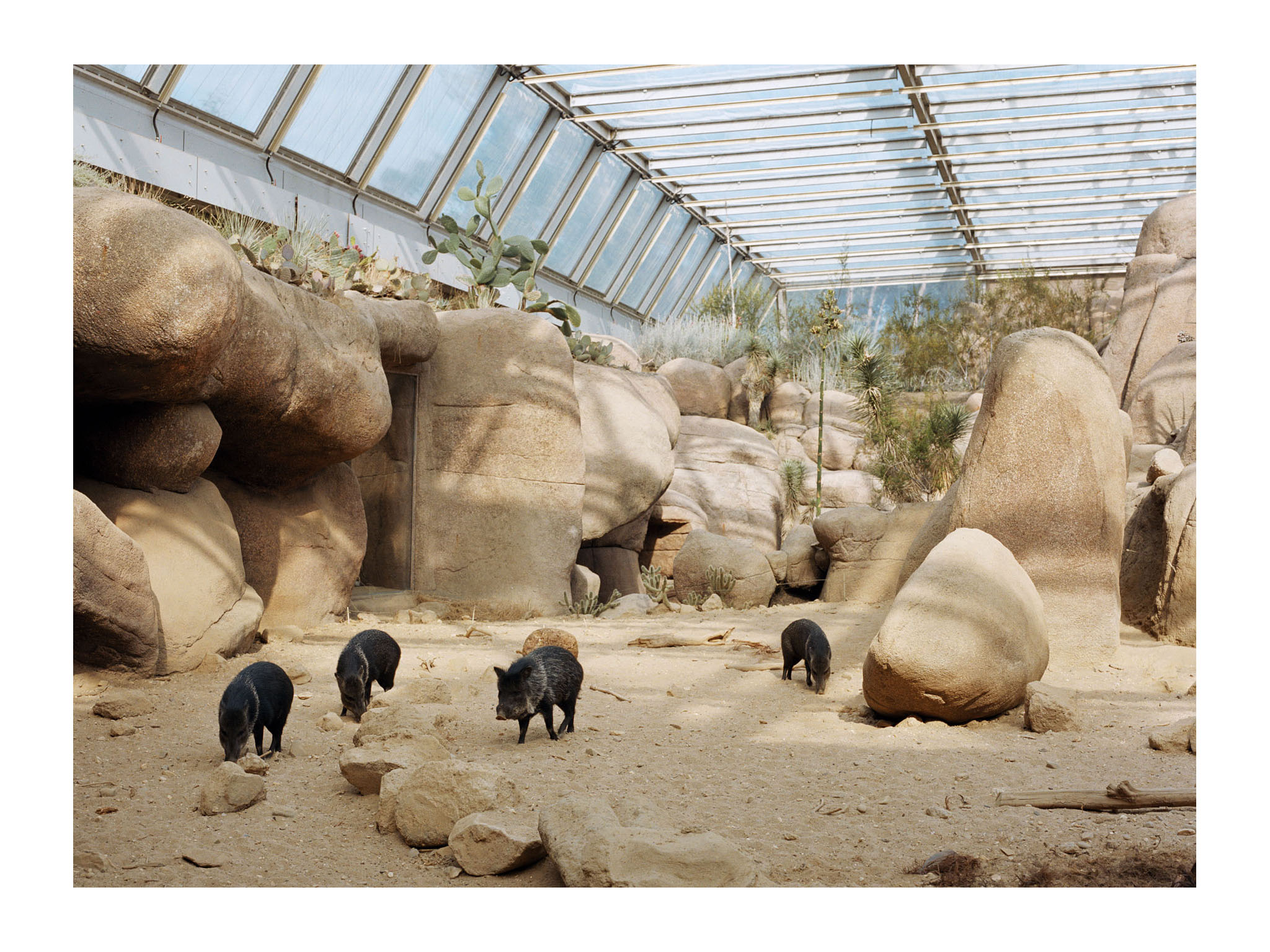
Boars, Nijmegen Zoo, The Netherlands, 2004
Alaska Magazine
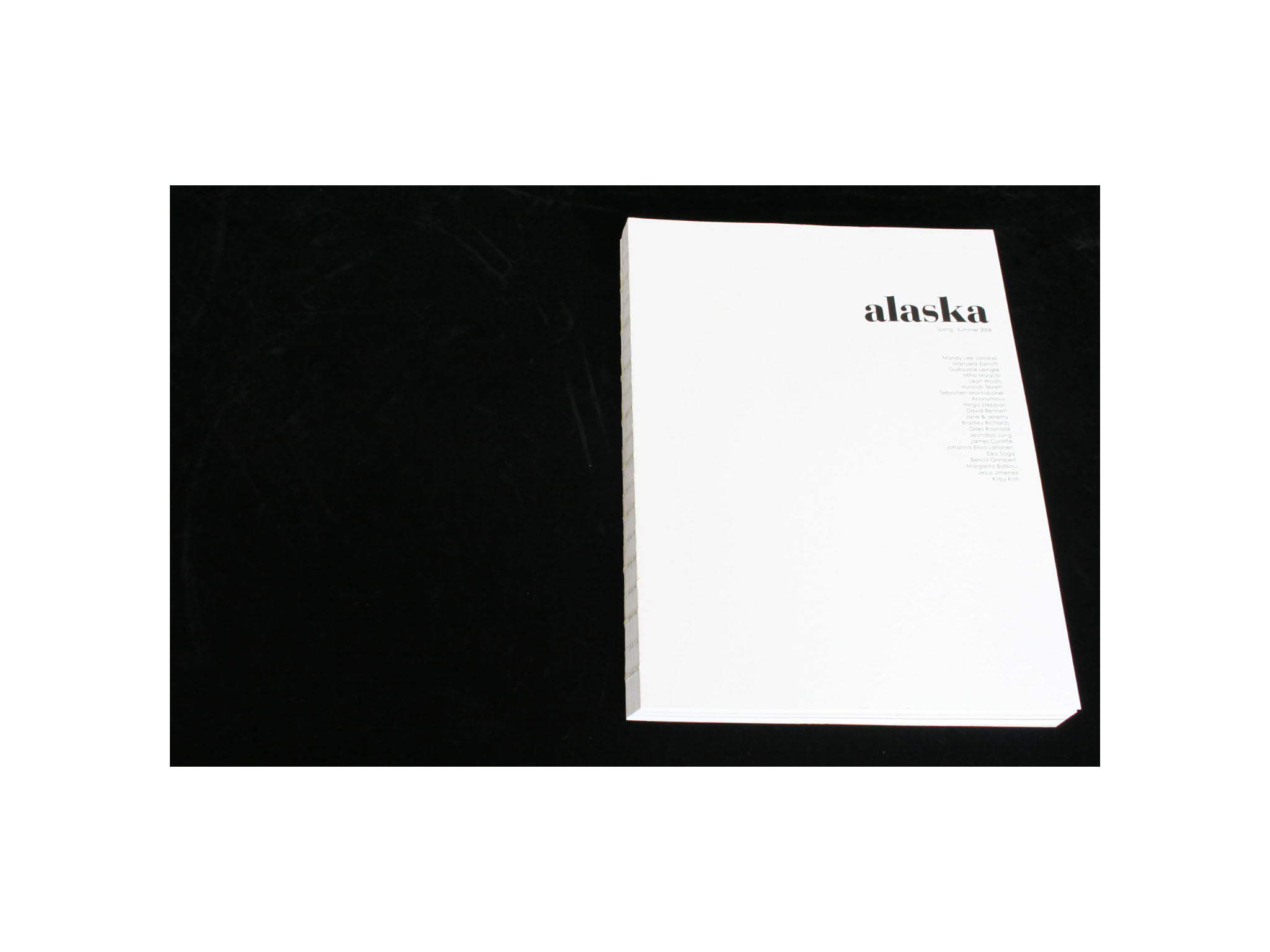
Alaska Magazine
Alaska Magazine
Alaska Magazine
Alaska Magazine
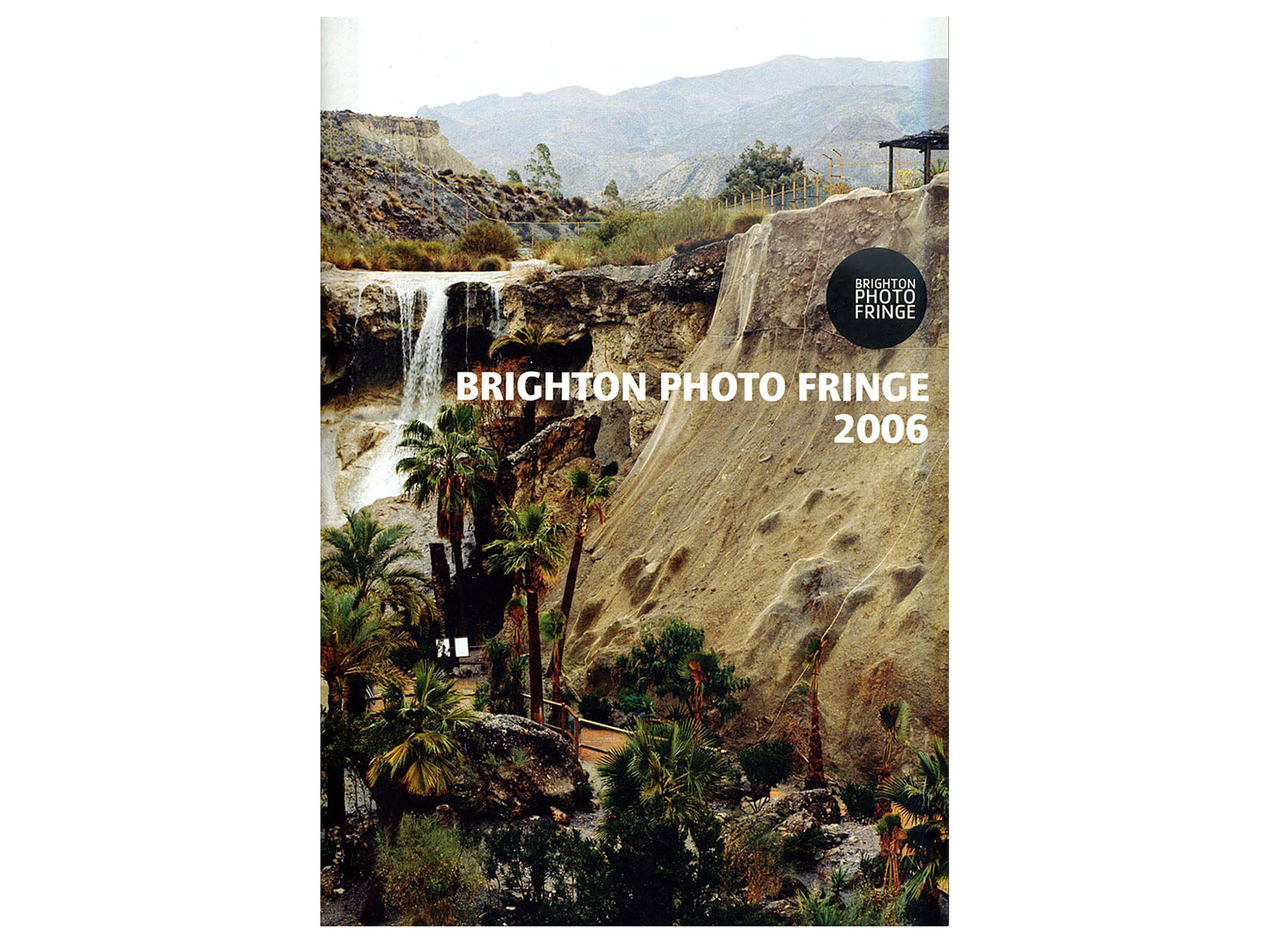
Brighton Photo Fringe 2006