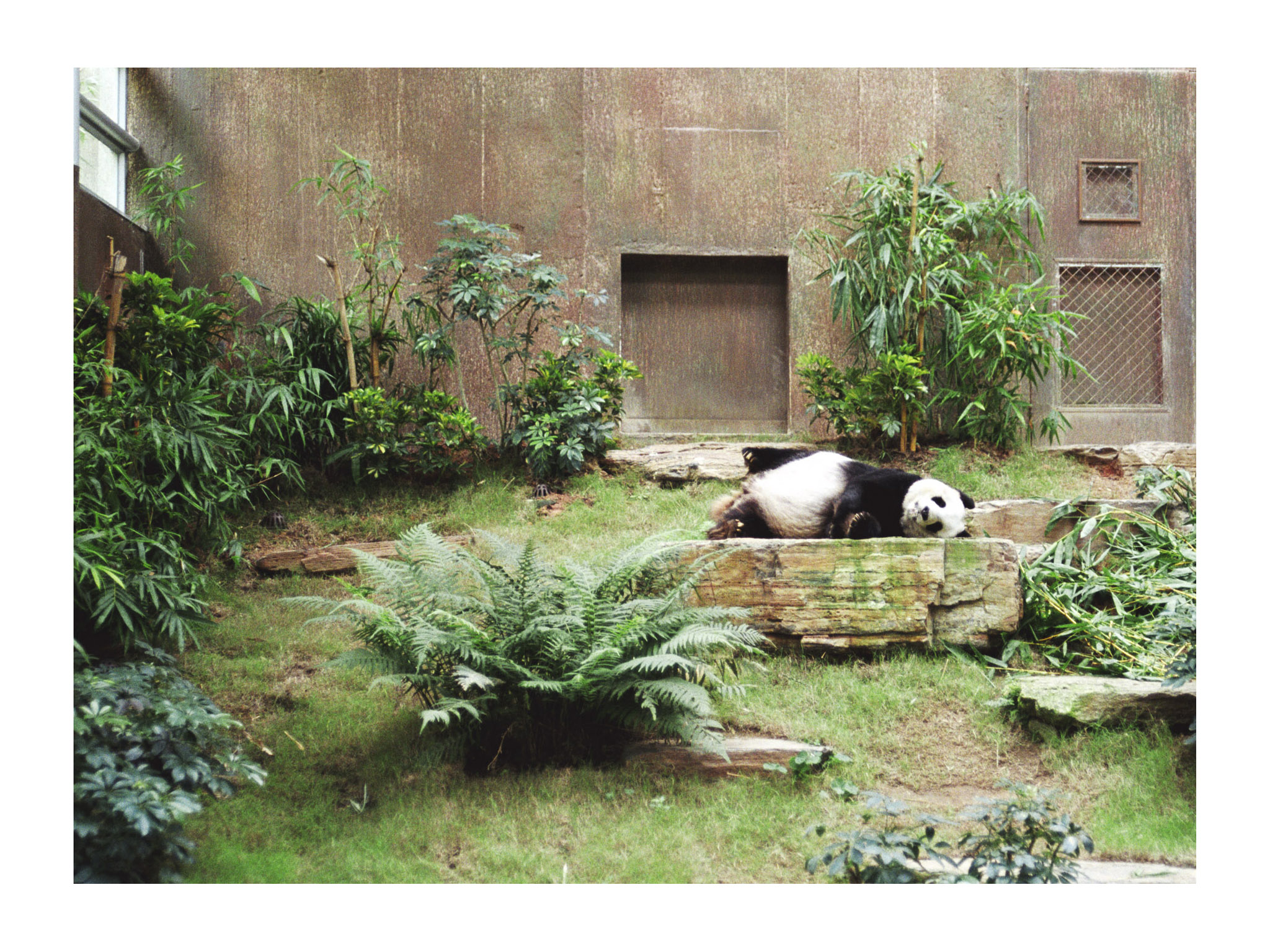
Where The Grass is Green brings together a significant body of Mandy Lee Jandrell’s photographic work that critically examines how ideas of nature, utopia and paradise are manufactured, circulated and consumed under late global capitalism.
Produced in the UK, the Netherlands, China and South Africa, the project focuses on the transformation of nature into a stylised, consumable image—an aestheticised fantasy increasingly detached from ecological reality. The exhibition title, borrowed from the song Paradise City, operates ironically, pointing to the persistent desire for idealised “elsewheres” at a moment when environmental degradation is both widely acknowledged and structurally ignored.
Environmental concern sits at the core of the project, positioning the work as an implicit critique of capitalism’s capacity to perpetually reproduce images of abundance while failing to address the escalating realities of ecological crisis. Nature appears not as an autonomous or endangered system, but as a cultural construction: curated, regulated and packaged through tourism, leisure industries and commercial spectacle. In this context, the Anthropocene is not framed as a distant abstraction, but as a condition already embedded within everyday visual culture, in which representations of “nature” function as commodities that mask extraction, displacement and environmental loss.
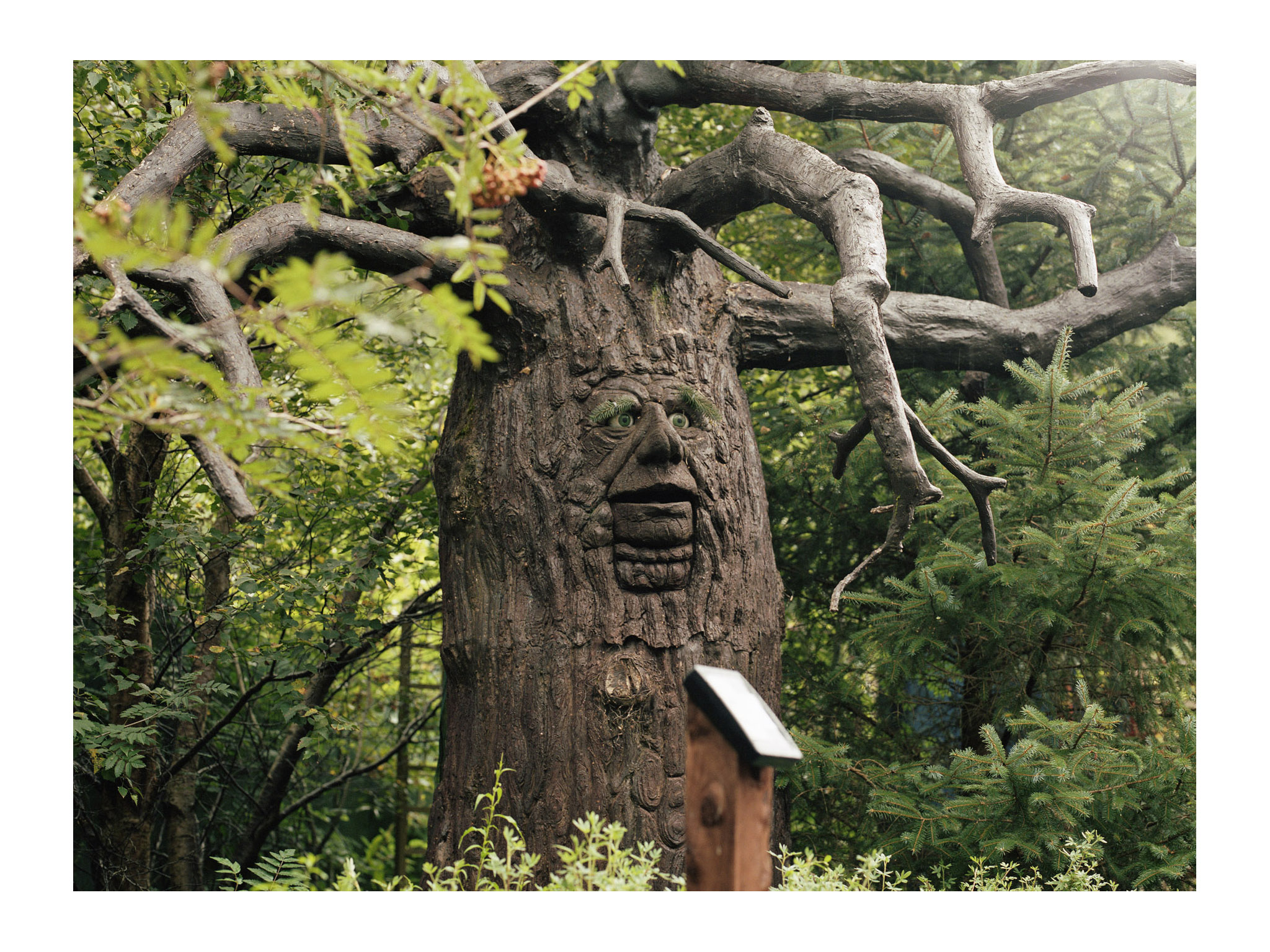
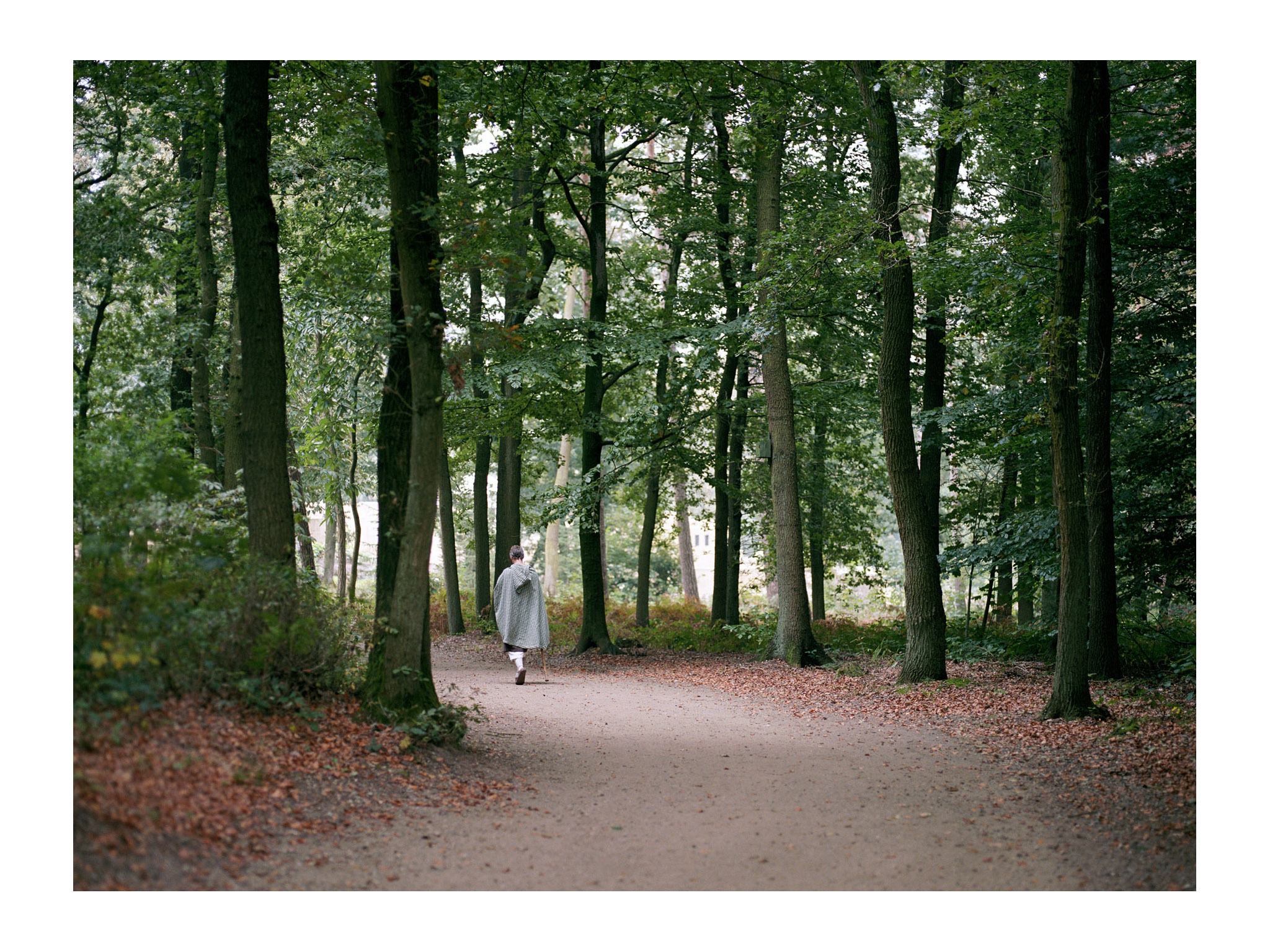
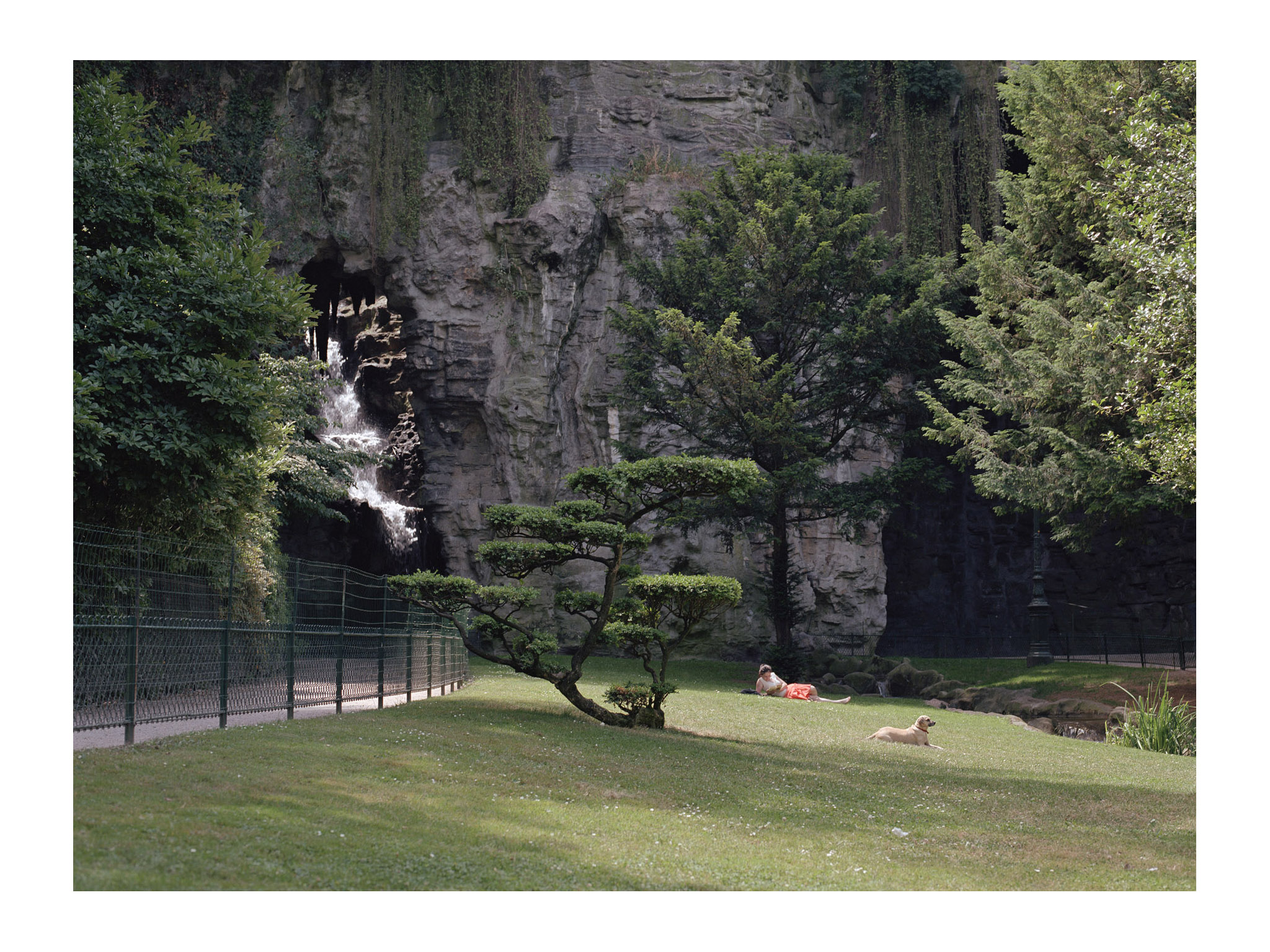
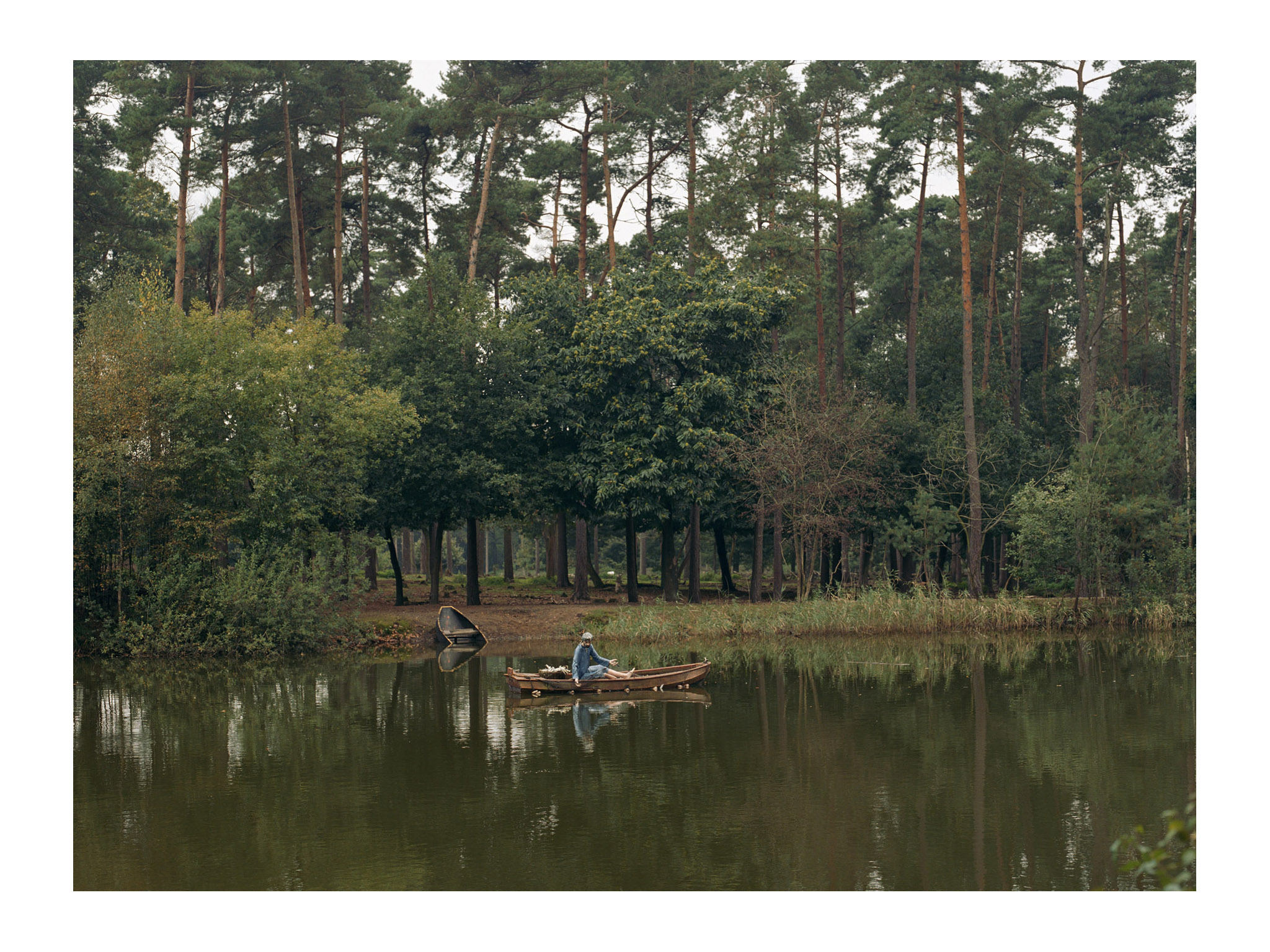
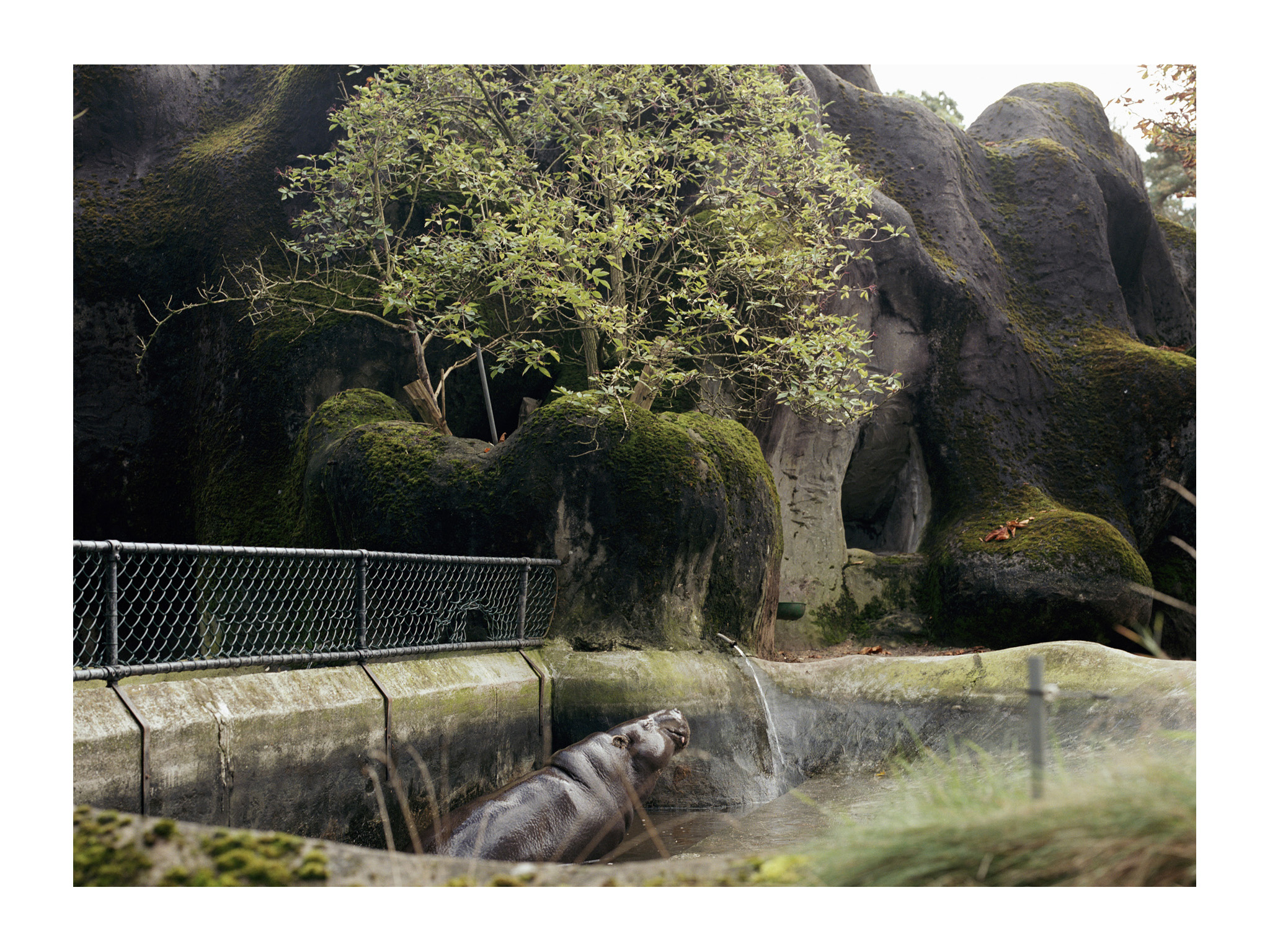
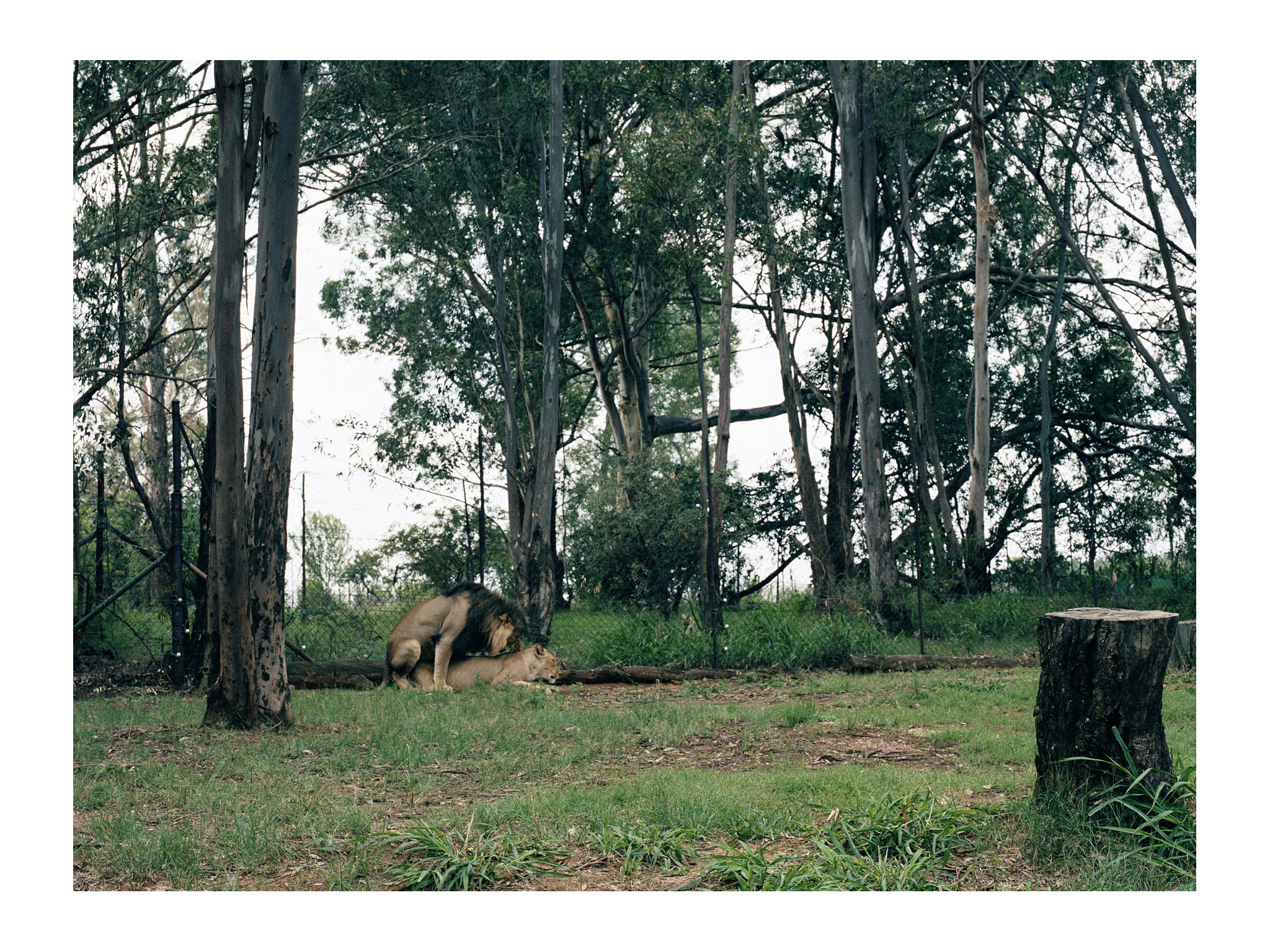
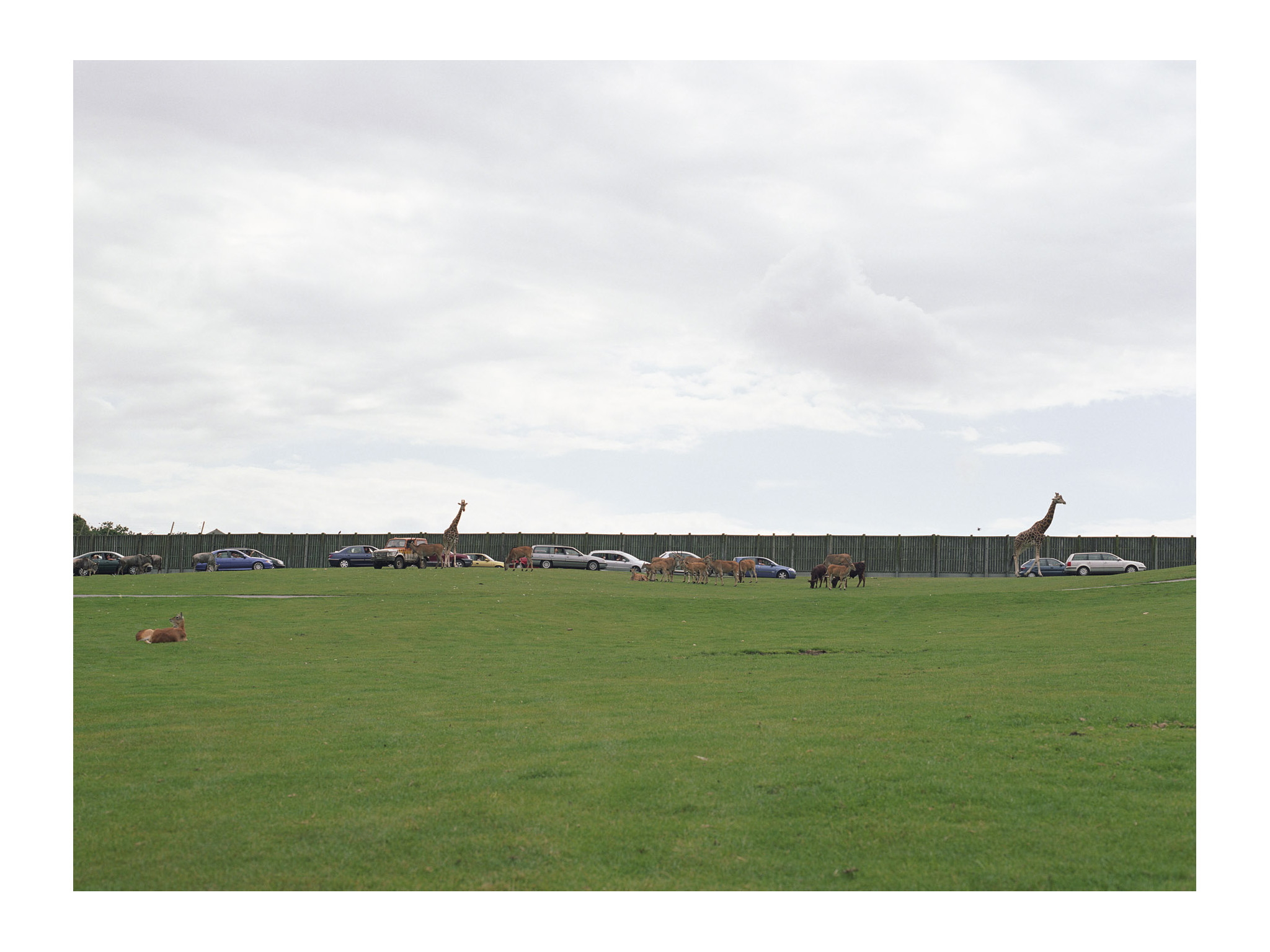
Photographed across wildlife parks, botanical gardens, historical recreations and theme parks, Jandrell’s images trace how landscapes are meticulously choreographed to fulfil expectations shaped by global tourism and consumer desire. Her snapshot-like visual language mirrors the habits of tourist photography, implicating the viewer within these systems of consumption while revealing how perceptions of the “natural” are carefully pre-scripted.
These environments promise escape, reassurance and nostalgia, yet they remain firmly structured by the logics of profit, efficiency and ideological containment—offering simulated contact with nature at precisely the point when environmental collapse demands systemic change.
A central tension within the work lies between authenticity and fabrication. By adopting the aesthetic codes of documentary photography, clarity, neutrality and apparent objectivity, Jandrell deliberately photographs artificial environments where reality and fiction collapse into one another. This strategy exposes how documentary language can be mobilised to naturalise deeply constructed realities.
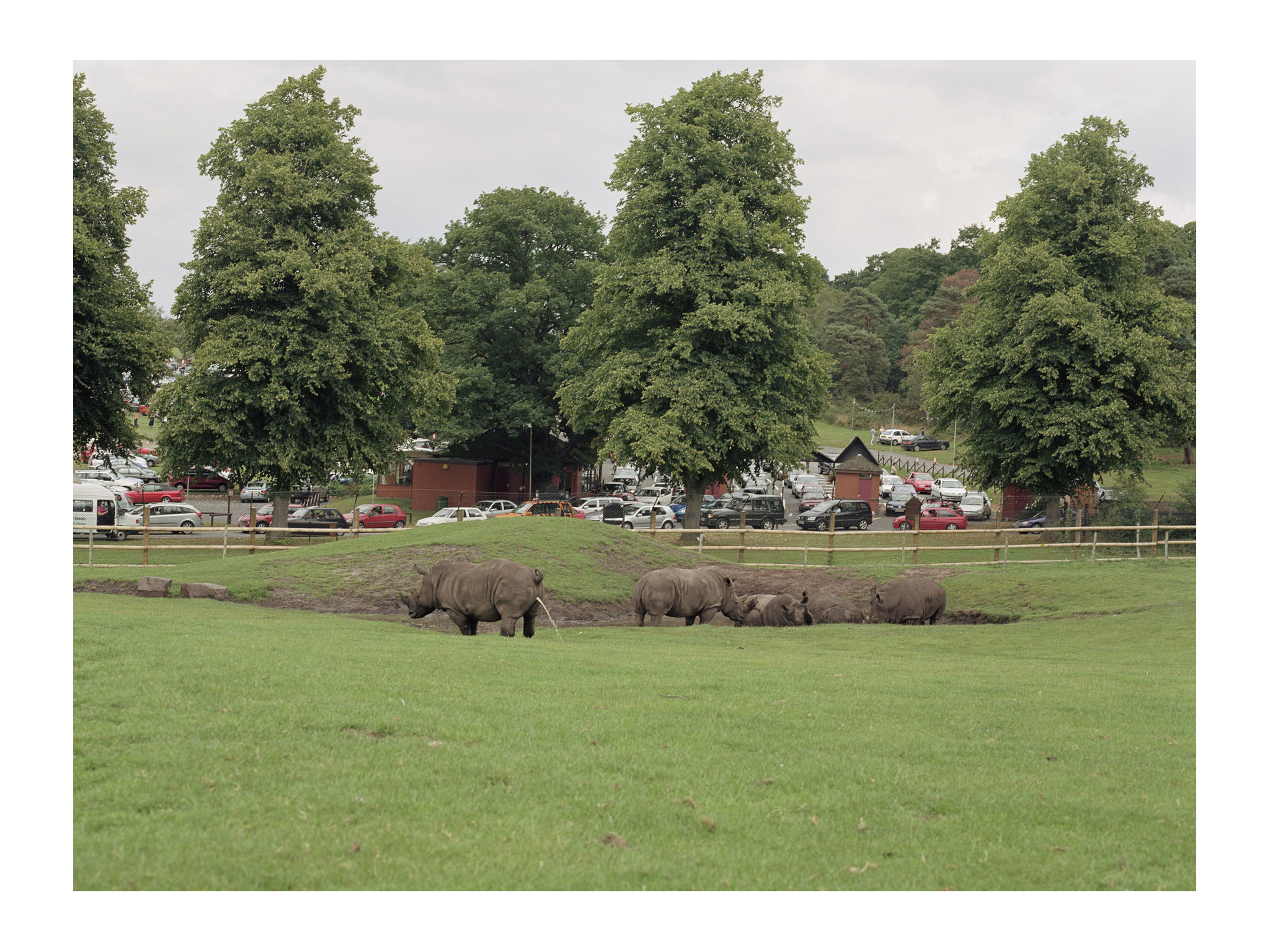
Her stated attempt to “reintroduce some of the real” by juxtaposing fabricated environments with the behaviour of their visitors reveals the disjunction between lived experience, economic reality and the fantasies these spaces are designed to sustain. Subtle humour and visual dissonance run throughout the series, unsettling the comfort of spectacle and prompting reflection on how narratives of nature, leisure and progress are produced, performed and consumed under global capitalism.
Where The Grass is Green was originally produced for a solo exhibition at The Mead Gallery, University of Warwick in 2004, curated by Helen Legg. Works from the series have since been exhibited and published widely in the UK and internationally.

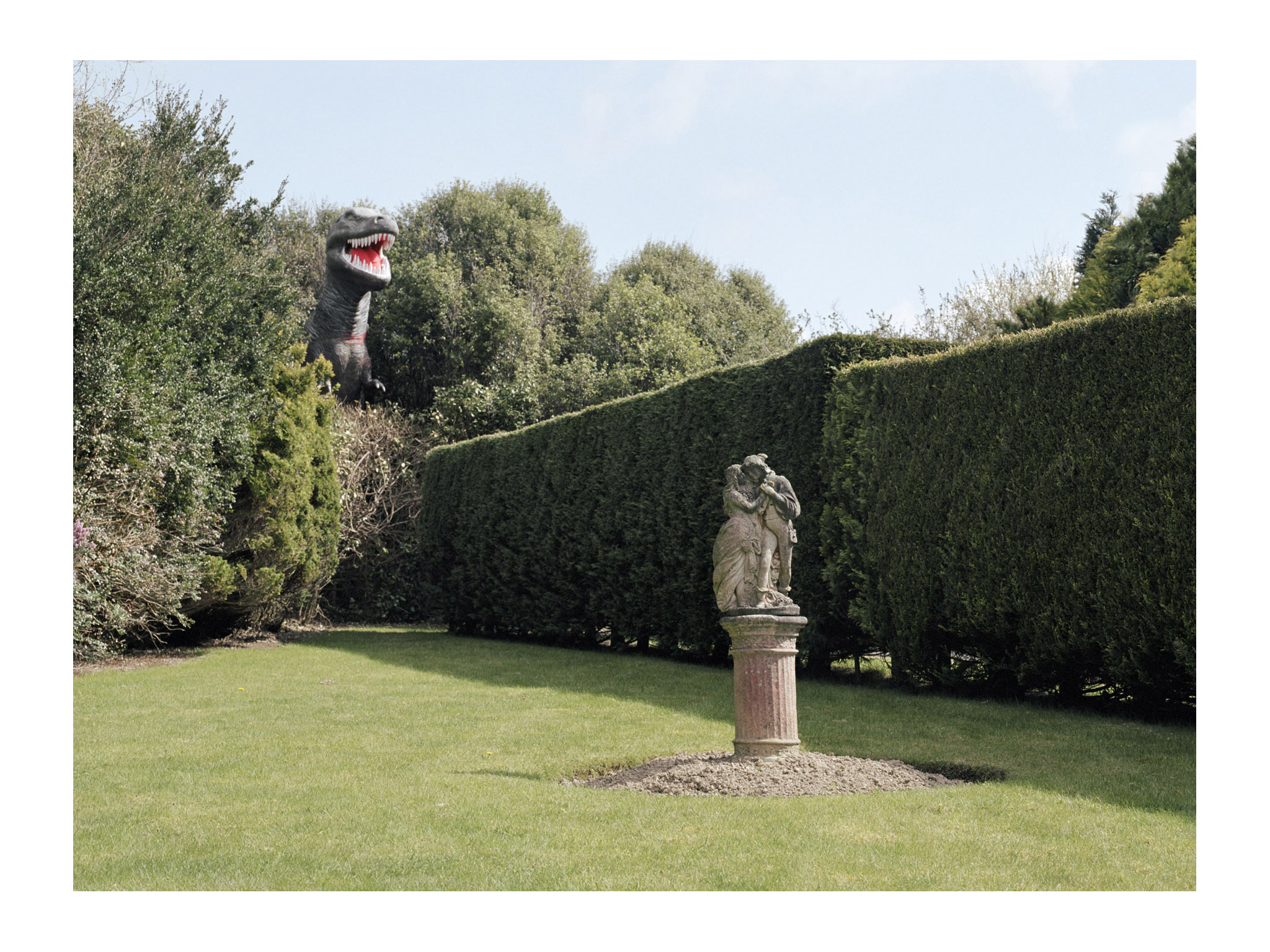
T-Rex, World in Miniature, Cornwall, 2003
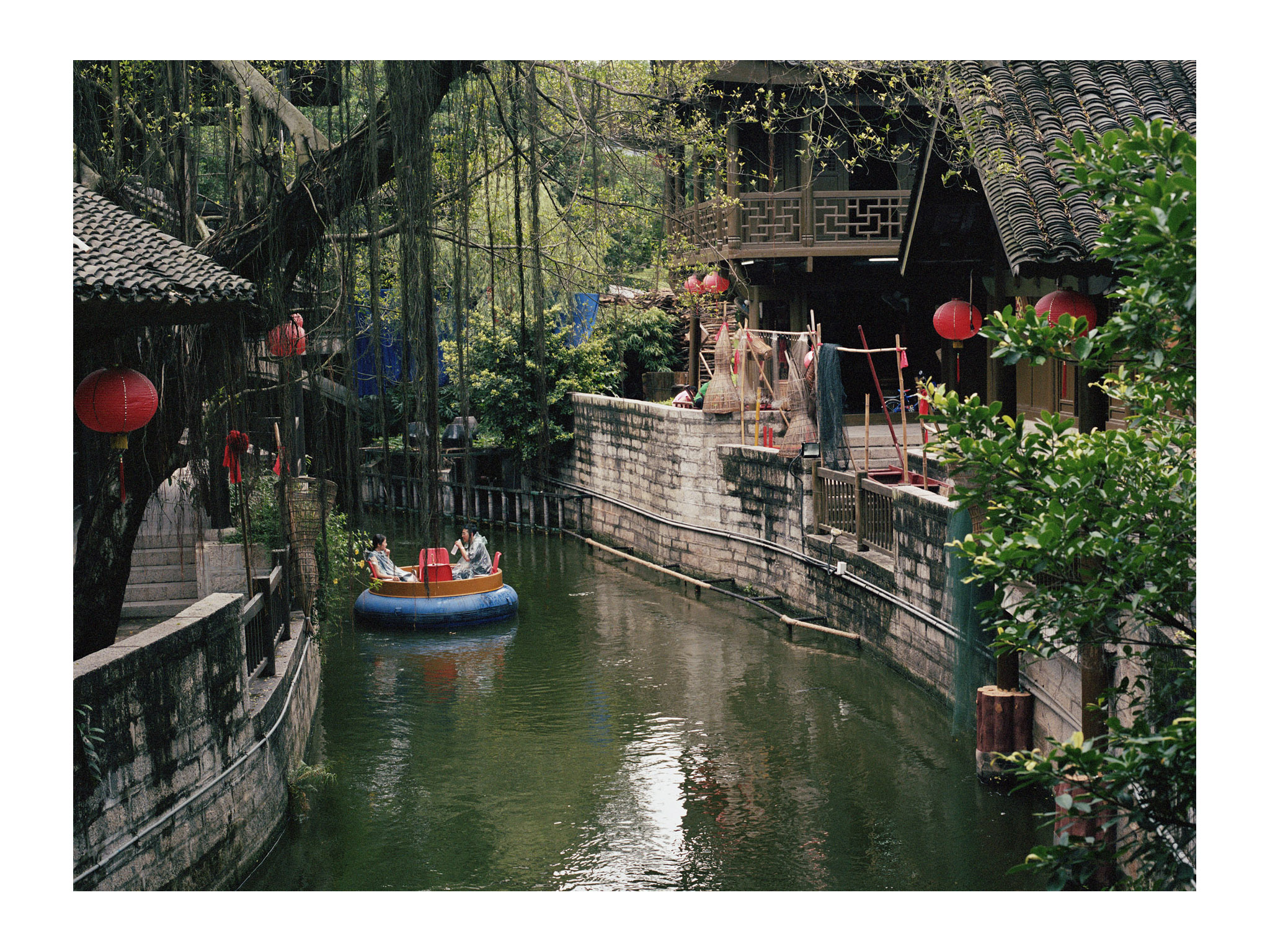
China Folk Culture Village, Shenzhen, China, 2003
Tree, The Bard’s Quest, Wales, UK, 2004
Shepherd, Open Air Bible Museum, The Netherlands, 2004
Rhino, West Midlands Safari Park, Worcester, UK, 2004
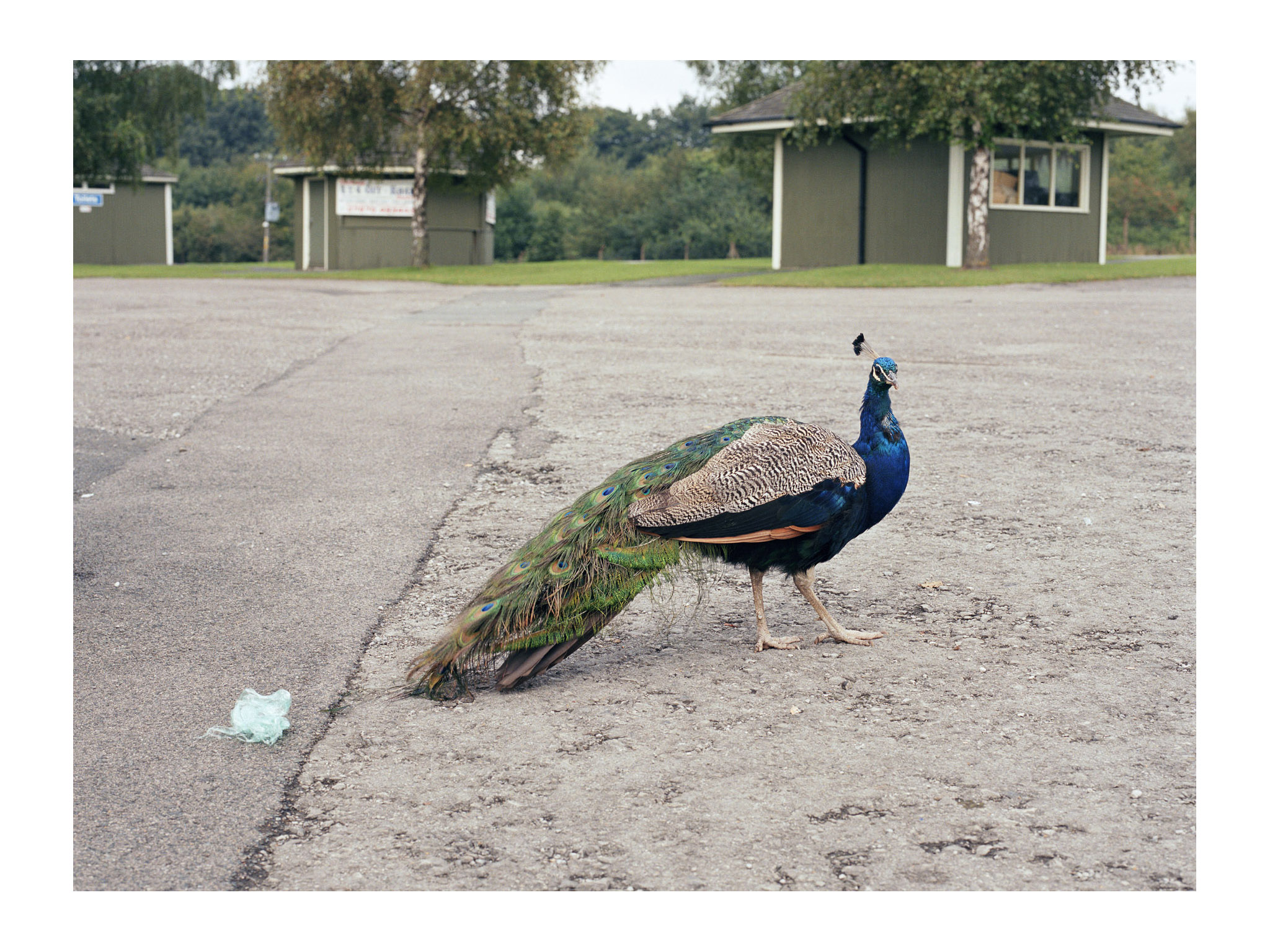
Peacock, West Midlands Safari Park, Worcester, 2004
Parc des Buttes Chaumont, Paris, France, 2004
Sea of Gallilee, Open Air Bible Museum, The Netherlands, 2004
Hippopotamus, Nijmegen Zoo, The Netherlands, 2004
Lions, The Lion Park, Gauteng, South Africa, 2003
The Savanna, West Midlands Safari Park, Worcester, UK, 2004
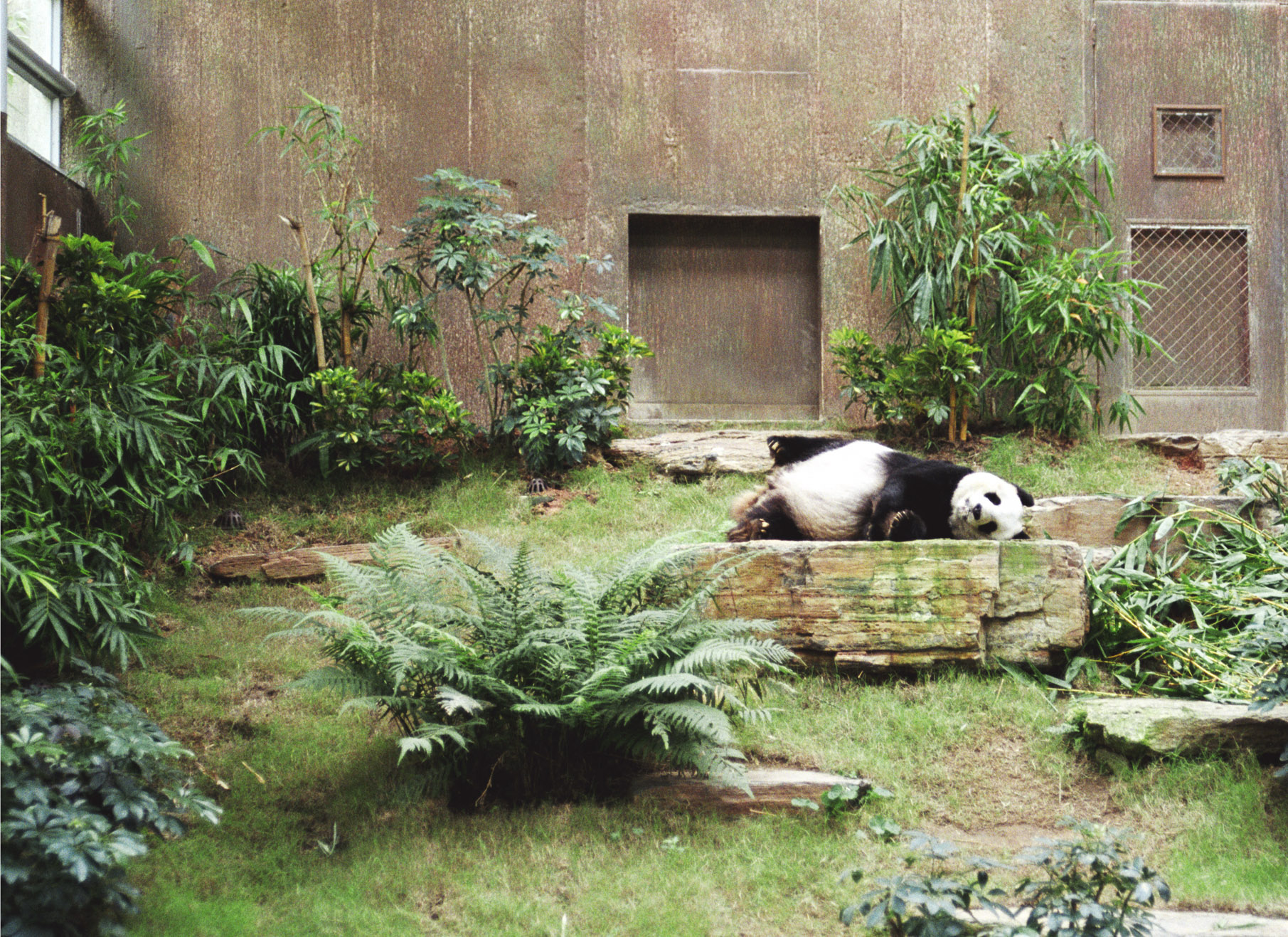
Panda, Ocean Park, Hong Kong, 2003