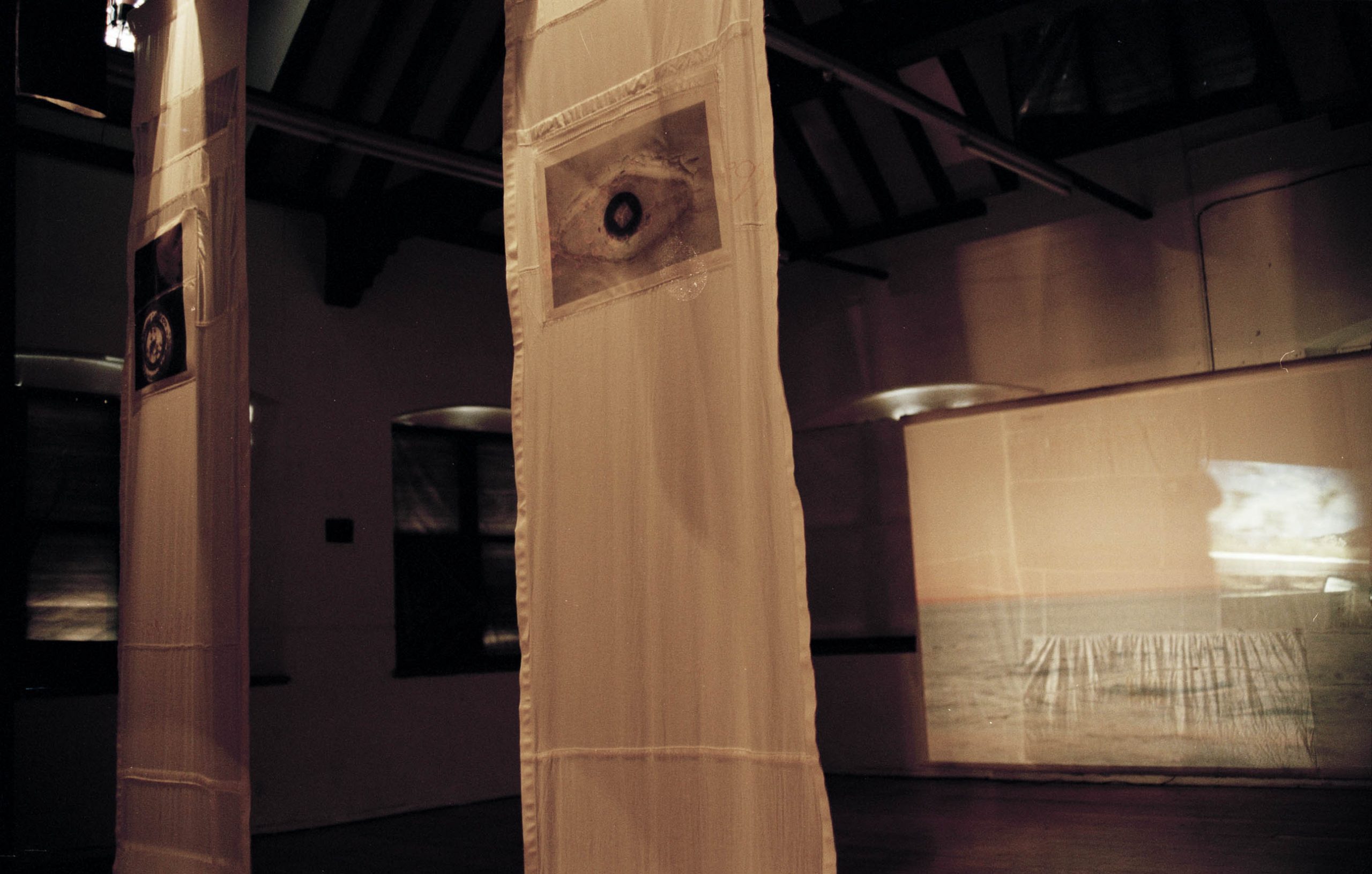
Liminal was created for Jandrell’s BA (Hons) Degree Show at the Michaelis School of Fine Art, University of Cape Town, in 1997.
Conceived as a large‑scale multimedia installation, the work explored transitional states and the psychological terrain of “in‑between” spaces.
The installation comprised hanging banners, fabric screens, and a layered sequence of video and slide projections. These elements were arranged to shape a shifting, immersive environment that invited audiences to move through overlapping zones of stillness, projection, shadow and reflection. The work drew on states that hover between categories—between urban and rural, between different modes of consciousness, and between the familiar and the uncanny. This interest in liminality became central to the work’s conceptual framework, positioning the viewer inside a space where meaning remained open, unstable, and in transition.
Staged in a performance hall and developed with the sensibility of a theatrical set, Liminal deliberately blurred the boundaries between installation and performance. The audience’s movement through the environment became part of the work itself. Visitors inhabited the space simultaneously as observers and as subtle performers, their bodies catching projections and casting shadows that shifted the visual field for others. In this way, Jandrell foregrounded the relational and participatory dimension of the installation, allowing the experience of the work to change continuously according to the viewer’s presence and navigation.
Conceptually, Liminal addresses states of transition—moments or environments where one phase ends and another has not yet fully begun. The work evokes the uncertainty and openness of thresholds: the ambiguity of a doorway, the suspension of twilight, or periods of personal change marked by disorientation, fear, possibility and transformation. In these threshold conditions, familiar rules loosen and new structures have yet to take shape. Jandrell’s installation captures the emotional and perceptual qualities of these states, creating a sensory experience that invites viewers to dwell within uncertainty rather than resolve it.
Through its interplay of projected imagery, fabric, spatial layering and audience interaction, Liminal investigates the uncanny—those moments when the everyday becomes charged with strangeness and the real begins to feel dreamlike. The work forms an early articulation of themes that continue to resonate throughout Jandrell’s practice: the collapse of fixed boundaries, the presence of the uncanny within the familiar, and the potential for transformative meaning that emerges in the spaces between.

Liminal, Installation View
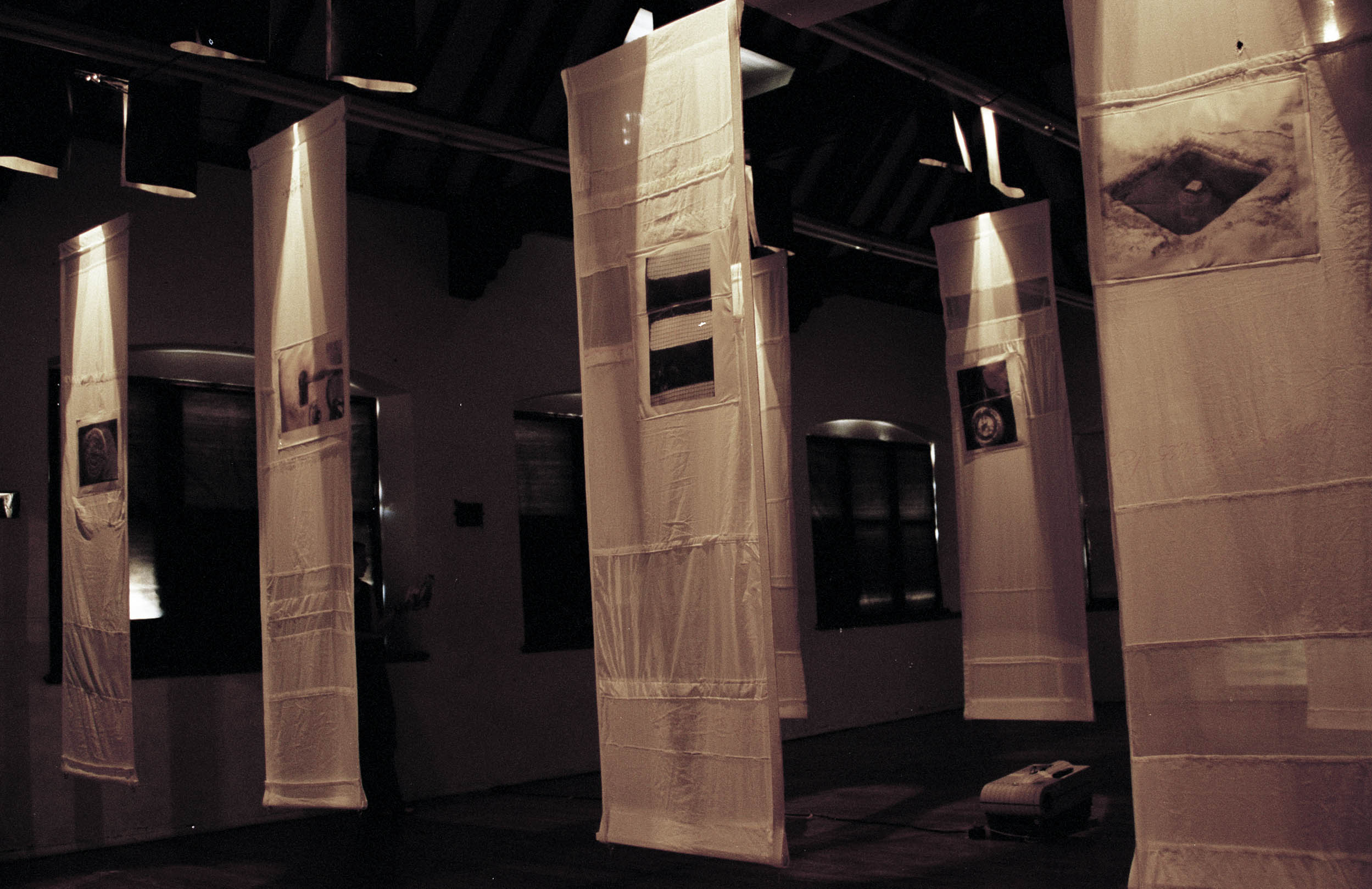
Liminal, Installation View
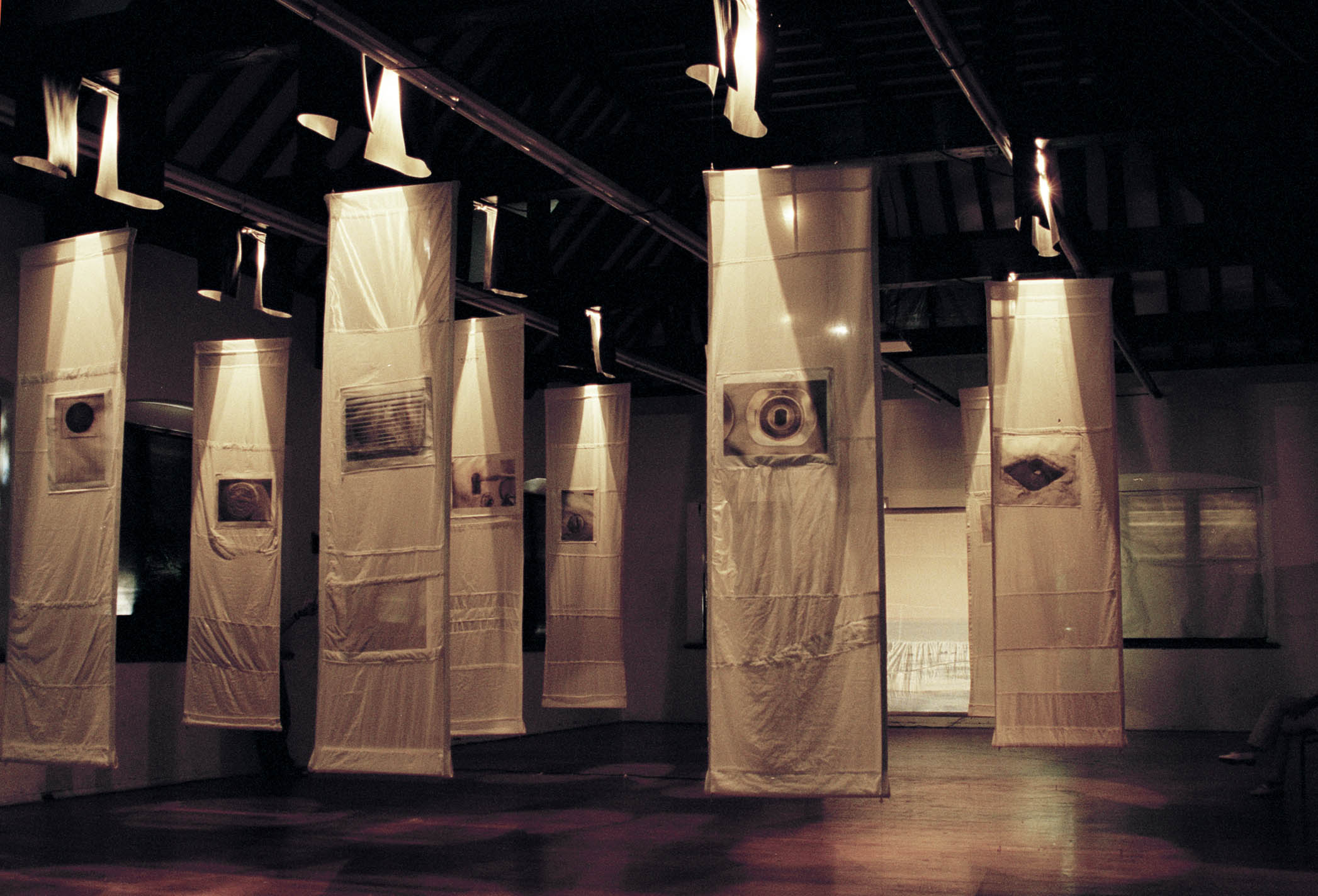
Liminal, Installation View
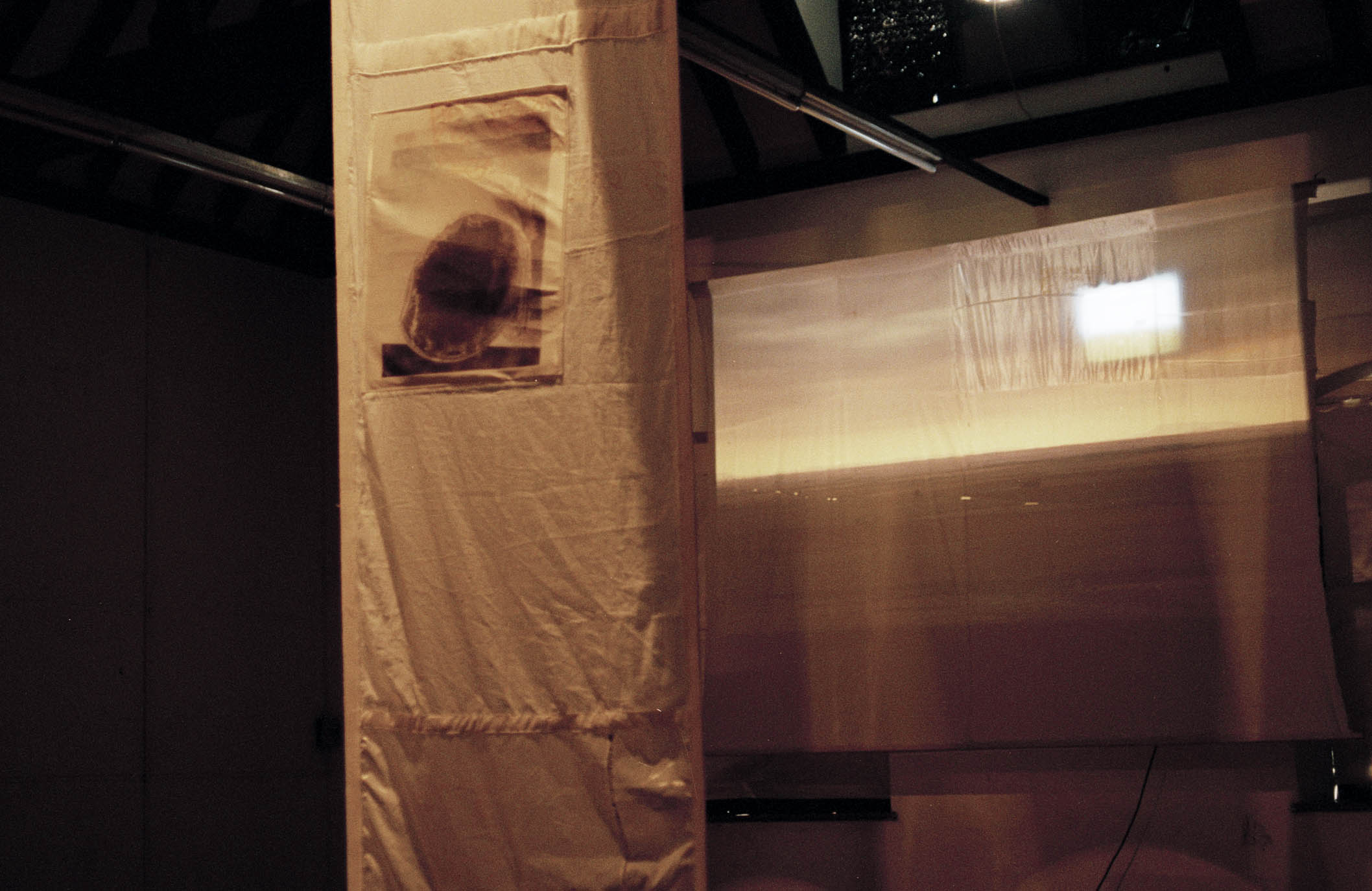
Liminal, Installation View