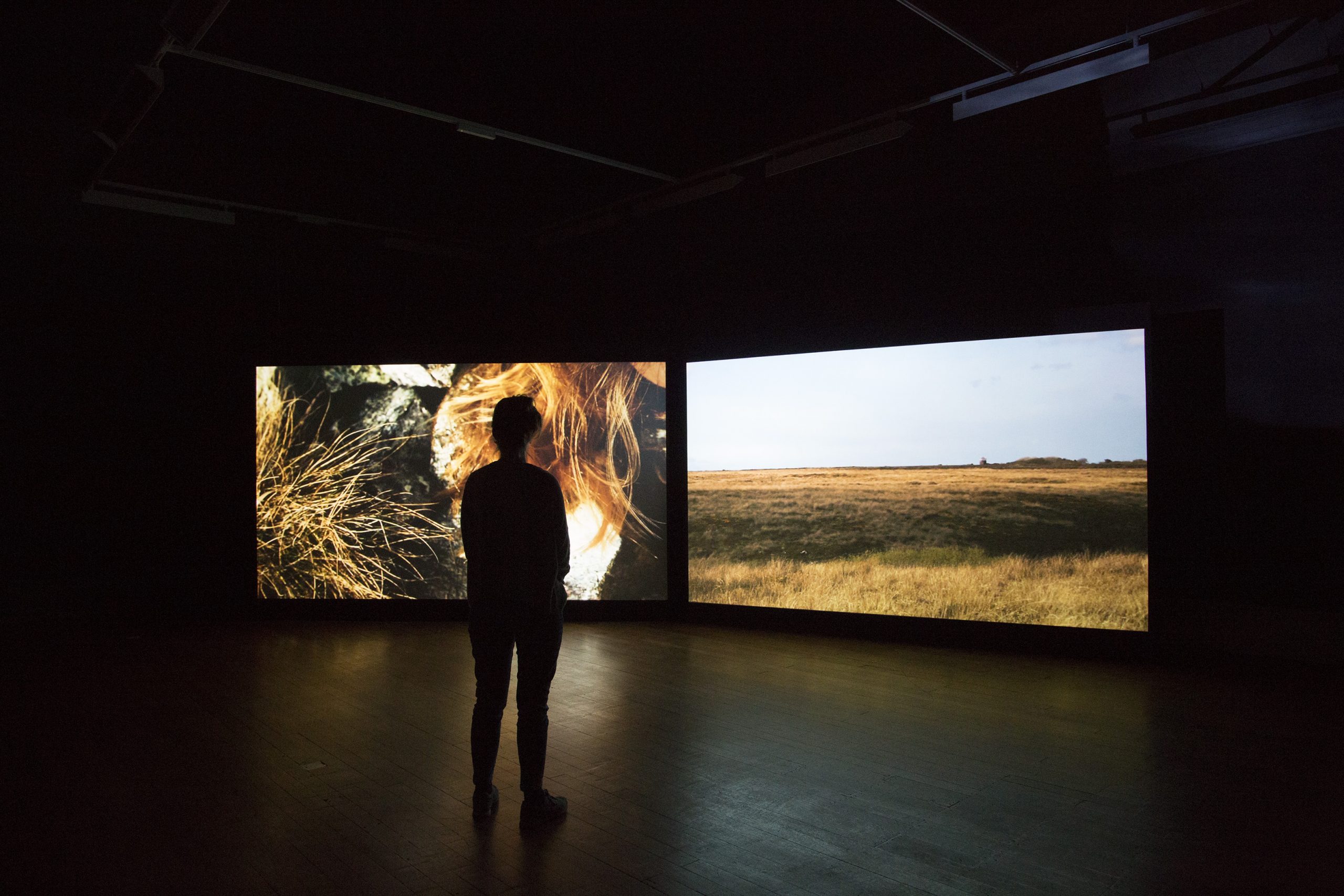
Usher Gallery, Lincoln, 2018
Mandy Lee Jandrell’s exhibition Evidence in Camera takes its title from the 1957 book by Constance Babington‑Smith, who served as Head of Photographic Interpretation at RAF Medmenham’s Central Interpretation Unit during the Second World War. Babington‑Smith was one of several highly skilled women—including archaeologist Dorothy Garrod—who played key roles in the interpretation of aerial reconnaissance photography. This historical reference forms the conceptual foundation for Jandrell’s two‑part exhibition, which examines the mechanisms through which photographic images inform, mislead, and shape perception.
Drawing on the visual and psychological codes of aerial reconnaissance photography, the exhibition uses fragmentation, deception and theatricality to investigate how images operate as both evidence and illusion. Jandrell’s long‑standing interest in surveillance photography derives from its ambiguity—its ability to trick perception, to function simultaneously as documentation and misdirection.
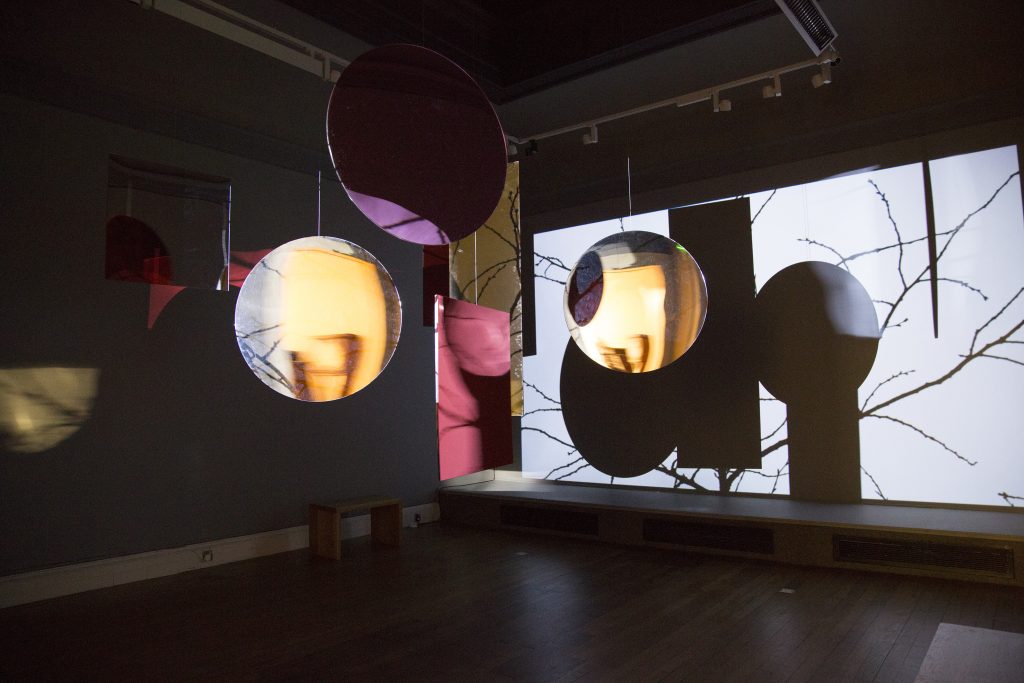
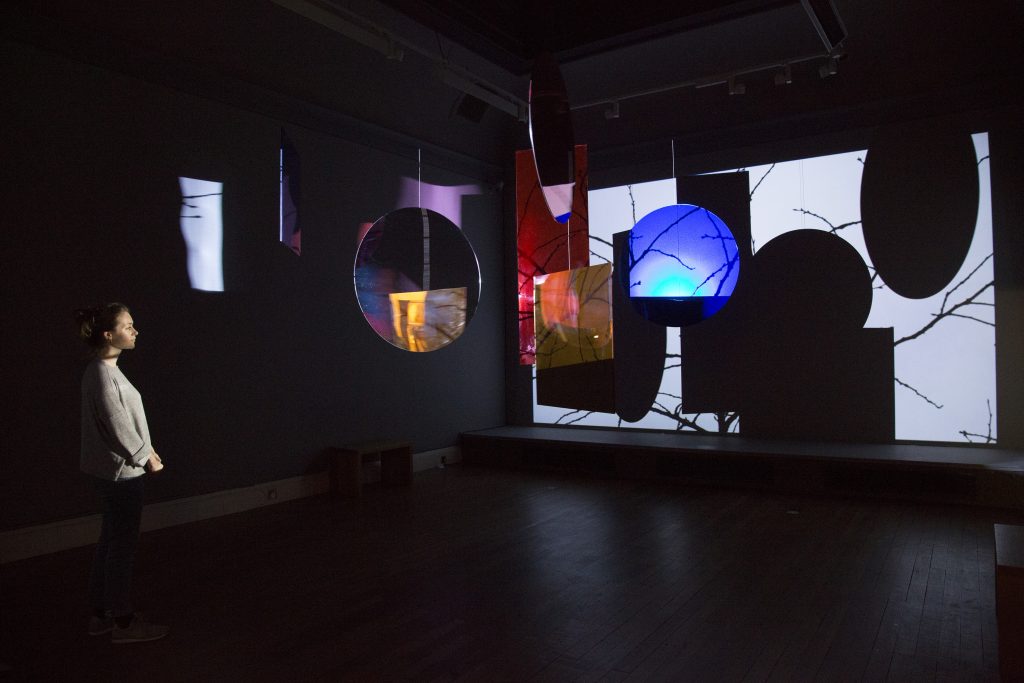
The first installation, Le Bibou n’est pas un Éléphant / The Owl is not an Elephant, explores the deliberate use of decoys in wartime imagery. Through an intricate arrangement of mirrors and reflected imagery, Jandrell constructs a theatrical set in which the distinction between reality and deception becomes unstable. The work echoes the illusive nature of photographic evidence: how images can conceal as easily as they reveal, and how perception can be manipulated through visual sleight of hand. By layering reflections and spatial disorientation, the installation calls attention to the limits of human vision and the ways in which images extend—or distort—our capacity to see.
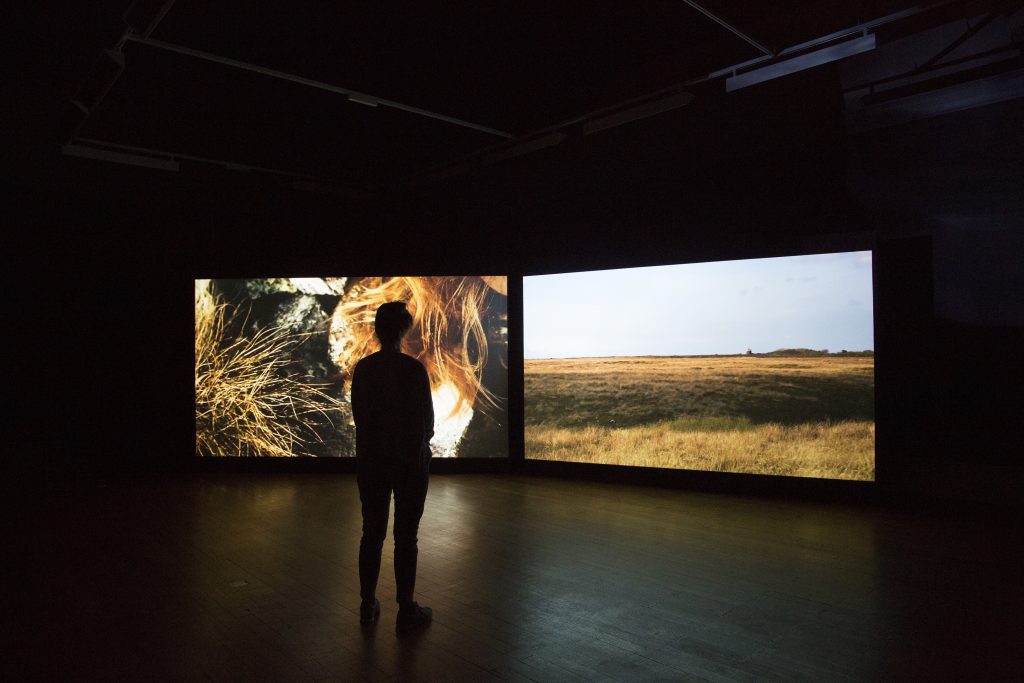
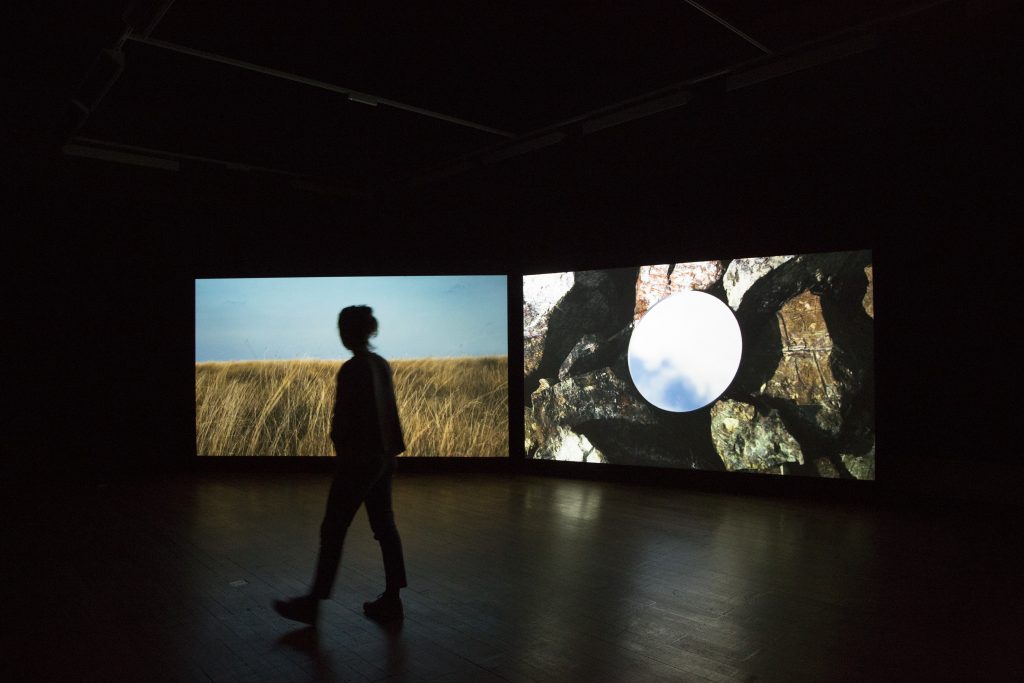
The second work, The Blue Hour, is a film that creates a fragmentary and disorienting narrative through the interplay of mirrors and light. Inspired by the coded mirror‑ and torch‑signals used by women of the Special Operations Executive in occupied France to communicate with incoming RAF planes, the film incorporates fictionalised, unintelligible signals to evoke a sense of encrypted communication and veiled meaning. Shot in Cornwall, the work oscillates between legibility and abstraction, underscoring the tension between what is visible and what remains hidden.
Together, these two works form a meditation on the interpretive instability of images—how photographs, whether in wartime or contemporary culture, shape belief, fabricate truth, and mediate our understanding of events. Supported by Arts Council England, Evidence in Camera situates Jandrell’s practice within broader questions of perception, secrecy and the politics of looking.