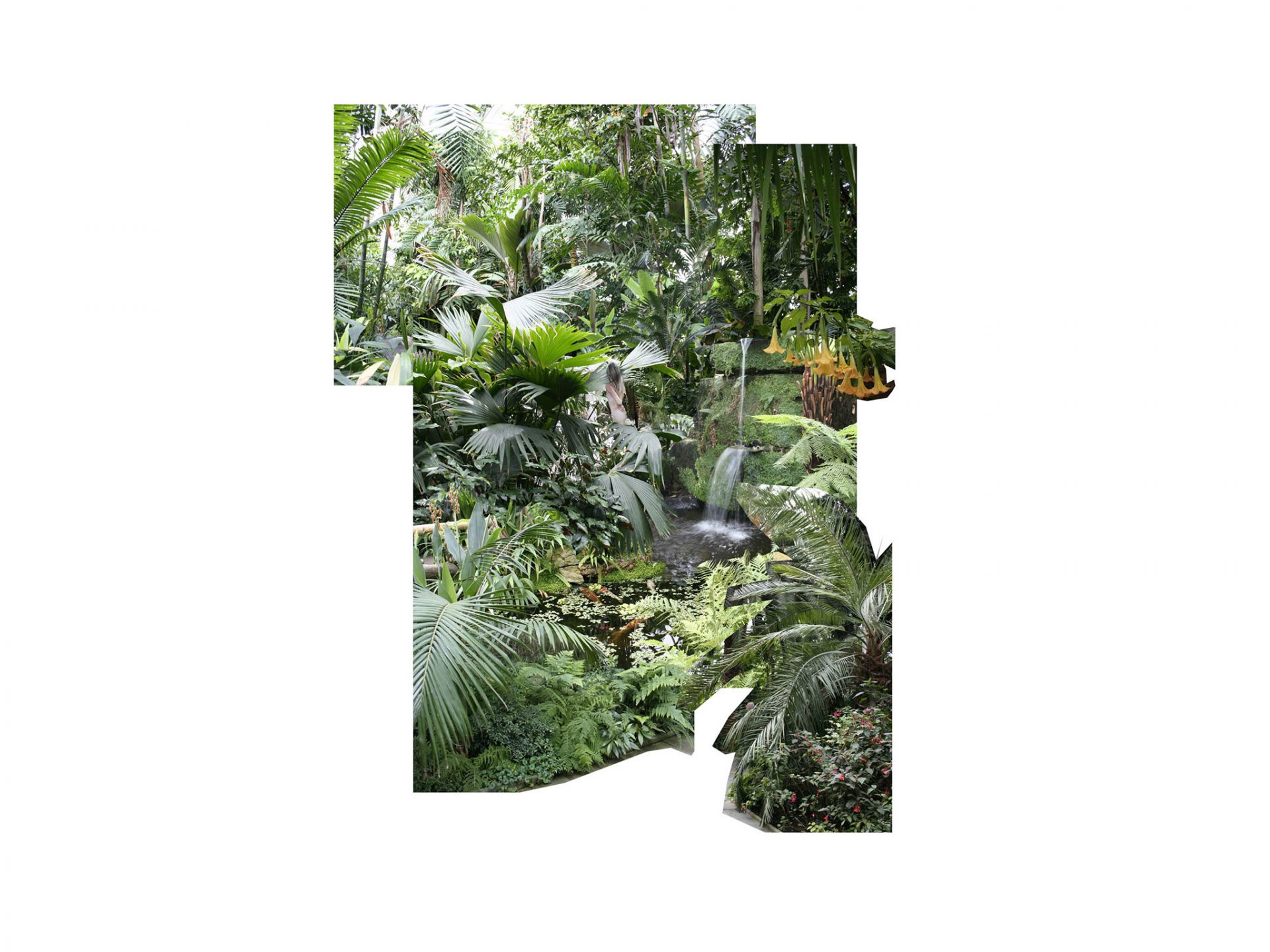
New Utopia is a series of digital montage works by Mandy Lee Jandrell that critically examines how idealised visions of paradise are constructed and circulated at a moment of escalating environmental crisis.
Produced within a visual culture shaped by media saturation, simulation and consumerist desire, the series interrogates how images of abundance and untouched nature continue to flourish even as ecological systems collapse. These fabricated jungle landscapes ask how utopian fantasies function not simply as escapism, but as cultural mechanisms that soothe anxiety, displace responsibility and ultimately obstruct collective responses to climate breakdown.
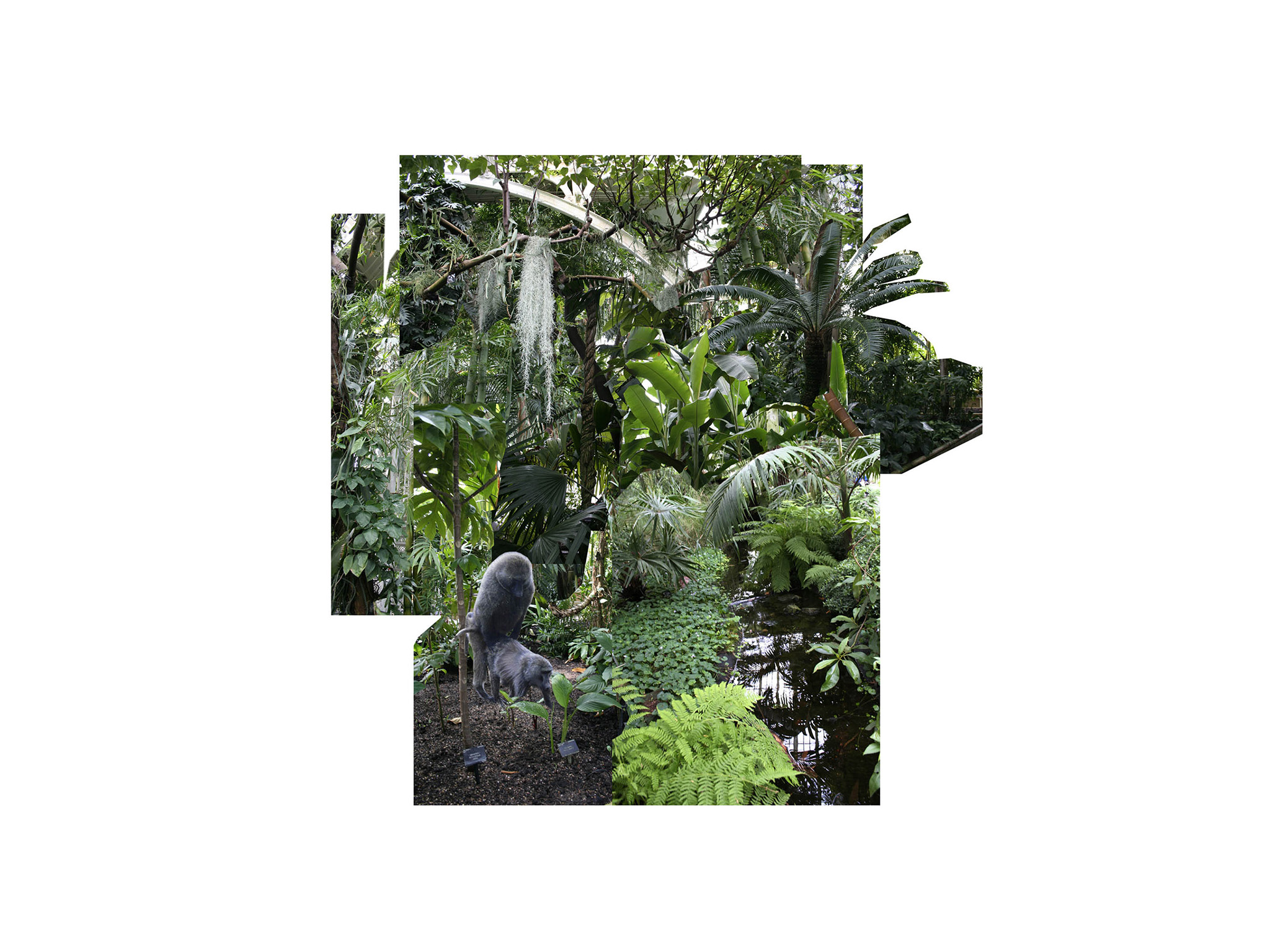
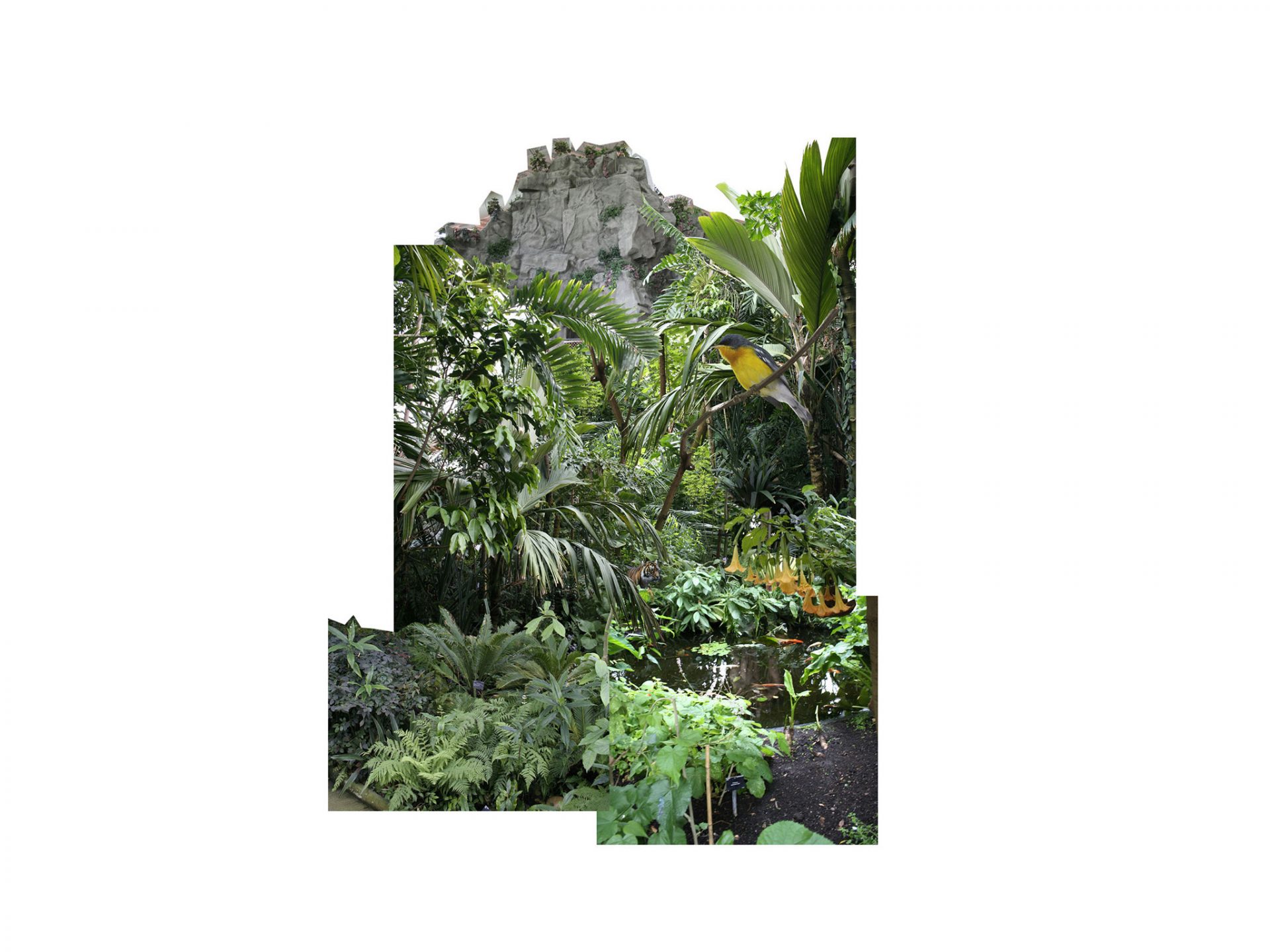
Built from layered compositions of Jandrell’s own photographs combined with imagery sourced online, the works assemble nature as a composite fiction. The visual languages of desire, fantasy and “the exotic” are reconfigured into seductive yet unstable environments in which paradise appears endlessly renewable. In this context, nature becomes an aesthetic surface, detached from material consequence, allowing environmental damage and climate inaction to be absorbed into a continuous cycle of image consumption rather than confronted as urgent political and ethical realities.
The large-scale prints retain the raw, irregular edges of their Photoshop construction, deliberately foregrounding the artifice of the image. Crude cuts, mismatched scales and visible erasures interrupt the immersive pull of the scenes, destabilising their apparent coherence. These ruptures resist the seamlessness typical of utopian imagery, forcing a confrontation with the labour, extraction and erasure required to maintain fantasies of purity and abundance. Through this tension, the works expose how visions of unspoiled nature are often sustained through forms of cultural and environmental violence.
Central to New Utopia is Jandrell’s sustained inquiry into photographic representation itself. The camera, she argues, compresses the complexity and volatility of the world into a single, consumable frame.
Photography does not offer a neutral view of reality, but instead produces selective images that gesture toward what they cannot fully reveal. This inherent “slipperiness”, the distance between representation and lived consequence, becomes a conceptual anchor for the series. The jungle operates simultaneously as image and metaphor: a symbol of collective longing for escape, renewal and a fictional sense of ecological innocence.
Situating these imagined environments within global systems of image production, New Utopia reflects on how capitalism generates meaning through repetition, simulation and myth‑making. In a moment when environmental collapse is widely acknowledged yet persistently deferred, paradise is reproduced not as a site of care or responsibility but as an endlessly consumable promise. Jandrell presents utopia as an assemblage, lush, seductive and fractured, laying bare the instability beneath its surface. References to disruption and violence point toward the colonial histories, extractive logics and consumer desires that continue to shape contemporary visions of the natural world.
Ultimately, New Utopia invites viewers to question how fantasies of nature are constructed, what ideological work they perform, and what realities they obscure.
By exposing the fragility and artifice of these idealised landscapes, Jandrell challenges the comfort of utopian thinking and its role in deferring ecological accountability. The series calls for a reconsideration of how images shape desire, how longing can displace action, and how the pursuit of an imagined paradise may hinder our capacity to respond to the environmental crises of the present.

New Utopia, Digital Collage, 2008
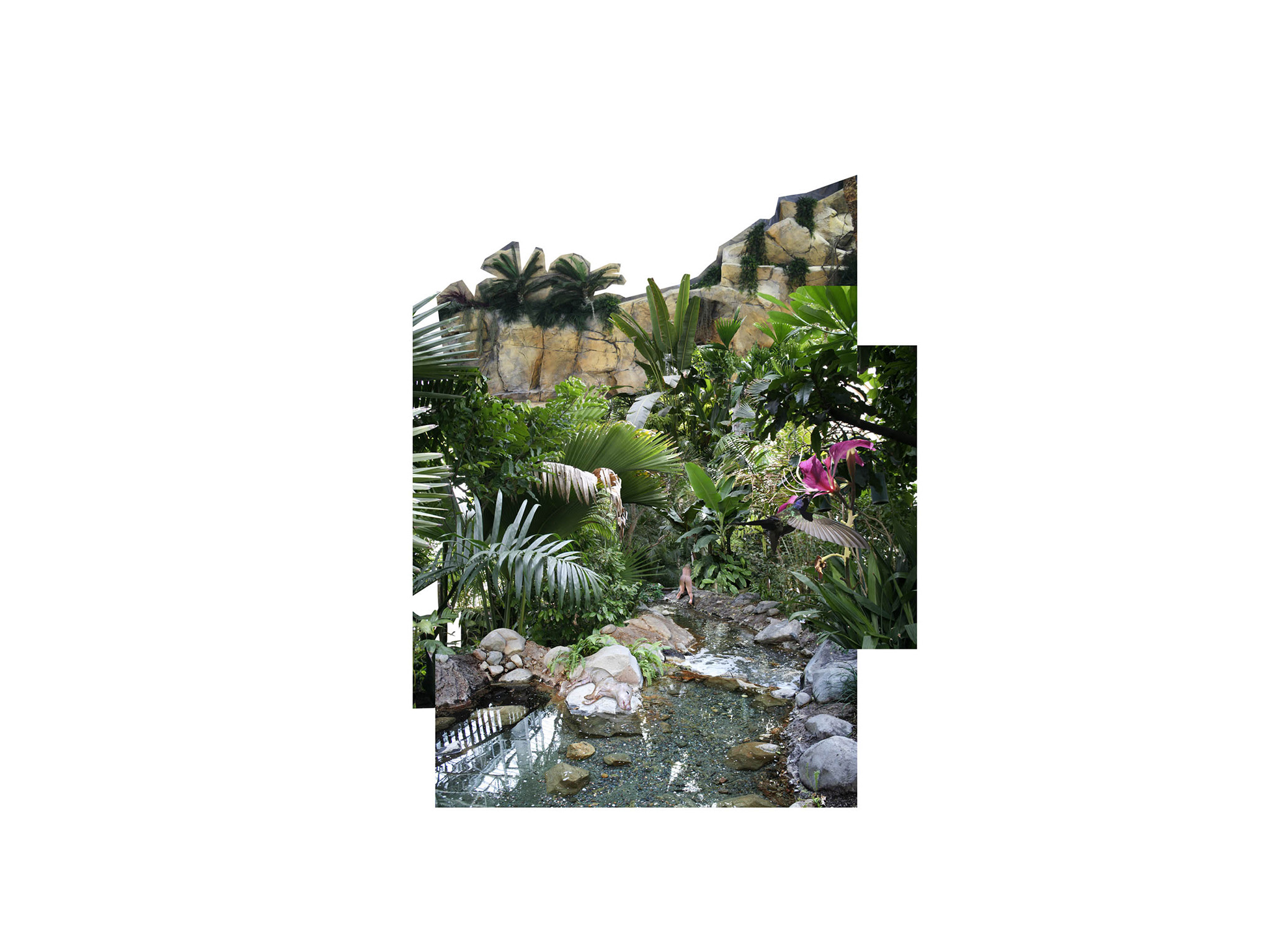
New Utopia, Digital Collage, 2008
JandrellFolio_059_web
JandrellFolio_060_web2